

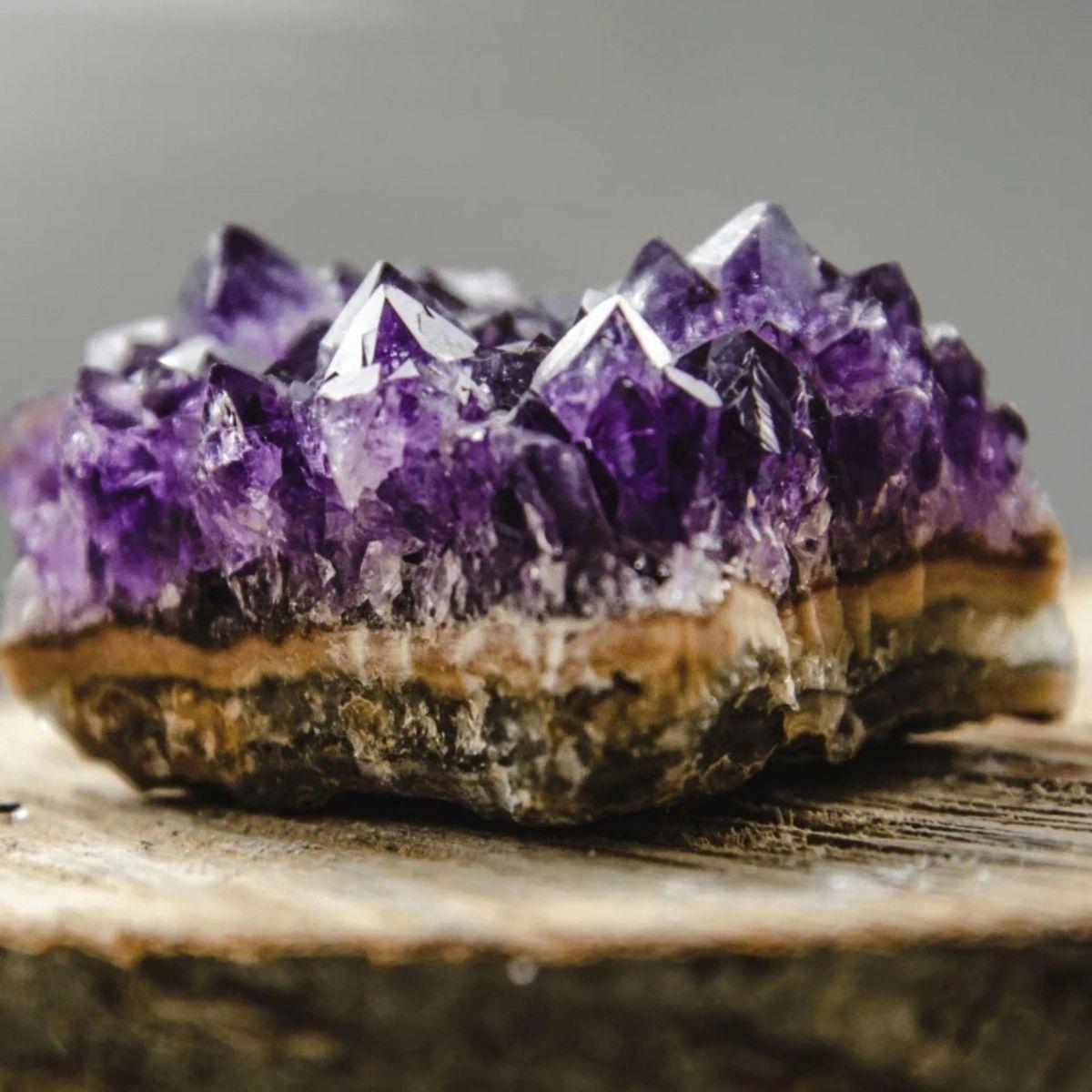
Amethyst is the stone people ask me about most, and it's almost never because they want to know what it is. They want to know what it's for — and whether they'd wear it.
This is that guide. What amethyst carries, which shade suits which person, the chakras it sits with, and the stones it pairs with, so it reads like part of your life rather than a crystal you're trying out.
If you landed here because someone in your life has a February birthday, start with the February birthstone jewelry guide instead — that one covers quality, buying, wearing and gifting. Looking for a different month entirely? Here's which stone belongs to which month, all twelve of them.
Ready to wear it? My February birthstone necklaces and earrings all sit on one shelf: genuine and treated stones first, labelled look-alikes after, so you always know what you're getting.
Quick Shop: Shop February | Amethyst Jewelry | All Twelve Birthstones | Shop Every Month

Jump To: What It Means | The Purple Range | Crown & Third Eye | What to Pair It With | When to Reach for It | Keeping It Purple | The Violet | February's Sky | FAQ

What Is the Birthstone for February?
Amethyst, on both the modern and traditional lists. One stone, no committee, which makes February the easiest birthday on the calendar to shop for. If you're here to buy rather than to understand it, the February birthstone jewelry guide is the one you want.
What Amethyst Means
Amethyst is purple quartz. That's the whole mineral story — silicon dioxide with trace iron, coloured by natural irradiation over a very long time. The meaning came later, and it came from people, not geology.
The Greeks called it améthystos — "not intoxicated." They believed it kept the wearer clear-headed. That's a two-thousand-year-old way of saying what people still reach for it for now: steadiness when your head is loud.
Across the traditions that use it, amethyst comes back to four things:
- Calm — the settling stone, the one you hold when the day got away from you
- Clarity — thinking straight, seeing the situation as it is
- Intuition — trusting the first instinct instead of the fourth opinion
- Protection — a quiet boundary, not a dramatic one
I want to be straight with you about what that means and doesn't. Amethyst is not medicine. It won't treat anything, and anyone telling you otherwise is selling you something. What it is: a wearable reminder of an intention you set on purpose. You put it on, you remember what you decided. That's the whole mechanism, and it's enough.

The Purple Range — and Which One Is Yours
Amethyst isn't one colour. It runs from barely-there lavender to deep royal violet, and the shade changes what the piece does on you.

Pale lavender, mid violet, deep royal — the same stone, three very different pieces of jewelry. Shop amethyst jewelry →
Pale lavender
Soft, quiet, easy. Reads as neutral against most skin tones and disappears into an outfit rather than announcing itself. Best if you want the reminder without the statement — or if you're wearing it every single day and don't want to think about it.
Mid violet
The classic. Enough colour to be clearly amethyst, not so much that it dictates what you wear with it. If you're buying your first amethyst piece, this is the safe middle.
Deep royal purple
The regal end — the shade that ended up in crown jewels and cathedral rings. It's a statement stone. Wear it when you want it seen, and give it room; deep amethyst doesn't want competition from other bold colours.
The honest advice: the best amethyst is the shade you'll put on. A deep violet that intimidates you stays in the drawer. A pale lavender you reach for daily does the job.
Amethyst, the Crown and the Third Eye
If chakras are part of how you think about stones, amethyst sits at the top two.
It's most associated with the crown chakra — the top of the head, the connection to something larger than the day you're having. And it doubles as a third eye stone — the space between the brows, intuition, knowing before you can explain why.
Practically, that's why amethyst shows up so often as earrings and pendants rather than bracelets. Worn near the head and the heart, it sits where those two energy centres are. A bracelet works fine — but if you're choosing with chakra in mind, go up rather than out.

Shop the Amethyst Double Teardrop Earrings →
Necklace or earrings, silver or gold, and how to keep a ring from getting chipped: the practical side lives in the February birthstone jewelry guide.
What to Pair Amethyst With
Amethyst layers beautifully, but not with everything. These are the pairings that work:
- Citrine — my personal favourite, and the one I reach for when I want a piece to feel regal. Purple and gold-yellow is one of the oldest luxury pairings there is, and it's flattering in a way that surprises people the first time they try it.
- Rose quartz — the softest combination. Purple and blush together read gentle and warm. Calm plus self-compassion, if you're layering by intention.
- Clear quartz — clean and amplifying. Clear quartz gives amethyst room to be the colour without competing.
- Labradorite — the grey-blue flash picks up amethyst's cooler notes, and the two together are the intuition stack.
- Moonstone — both are cycle stones. Milky white against purple is quietly beautiful and works year-round.
- Smoky quartz — grounds it. If amethyst alone feels too floaty, smoky quartz brings it back to earth.

Amethyst layered with rose quartz — the softest pairing there is.

Amethyst and citrine — purple and gold, the pairing I reach for most. Shop the citrine bracelet →
If you'd rather have both stones in one piece, the Citrine Glow Hoops carry citrine and amethyst together in 14K gold fill — the pairing already done for you.
What I'd avoid: deep amethyst with equally saturated red or orange stones. Two loud jewel tones fight each other and neither wins. Citrine works precisely because it's warm rather than loud.

Amethyst and labradorite — the intuition pairing.
If you're building a stack rather than a single piece, the bracelet stack guide walks through the whole method.
When to Reach for Amethyst
Not every stone suits every season. Amethyst is for:
- The overthinking weeks. When you've been circling the same decision for a month.
- Evenings. It's a wind-down stone more than a get-going one. If you want momentum, reach for carnelian instead.
- Anything requiring you to trust yourself. Hard conversations, big decisions, the moments where the first instinct was right and you talked yourself out of it.
- Sleep and rest. Amethyst by the bedside is one of the oldest habits in crystal practice, and it costs nothing to try.
If it's specifically stress or anxious spiralling that brought you here, the Amethyst for Stress & Anxiety guide has a 10-minute practice and an honest conversation about what a stone can and can't do.

Shop the Amethyst Hydro Quartz Pendulum Necklace →
Not sure amethyst is your stone?
The Gemstone Quiz takes 60 seconds and tells you which stone fits the chapter you're in — amethyst is one of six possible answers.
→ Take the Gemstone Quiz
Keeping It Purple — and the Time I Left Mine Out Too Long
I put my crystals out on the railing during full moons. Most months, without fail. It's a small ritual and I like it.
One time I forgot them. Not overnight — for days. And I remember glancing out at them and thinking: they're rocks. They'll be fine.
They were not fine.
It rained, and then we got one of those hot Alberta summer stretches, and the combination did the damage. The amethyst came back slightly faded — not ruined, but softer than it went out, and it never quite came back. My aura quartz fell apart completely. 😢
That last one makes sense once you know what aura quartz is: natural quartz with a fine metallic coating bonded to the surface. It's a surface treatment, and surface treatments do not survive days of rain followed by baking sun. If you want the full explanation of how those stones are made, the lab-grown gemstones guide covers it.
So: take care when you cleanse outdoors. Here's what I'd tell you now.
A few hours is plenty. Put them out after dark, bring them in before bed. The moon doesn't need three days to do its work, and three days is where the weather gets a vote.
Amethyst fades. The purple comes from trace iron and natural irradiation, and prolonged sun or heat reverses it — sometimes shifting the stone toward yellow. That's how a lot of commercial citrine gets made: heat-treated amethyst. Same reason you shouldn't store it on a sunny windowsill or leave it in a hot car. It's also a quartz, hard enough to scratch opal and pearl, so here's how to store amethyst away from the sun and your softer stones.
Coated and treated stones are the fragile ones. Aura quartz, anything with a plated or bonded finish, and anything strung on cord or with metal findings. Those are the pieces that don't get a second chance outdoors.
Everything else is simple. Lukewarm water, mild soap, a soft brush, rinse, pat dry. Here's how to clean amethyst and other quartz jewelry step by step, and the cleansing guide covers moonlight, smoke and sound — including the indoor methods, which are what I use now for anything coated.
The Violet, While We're Here
February's birth flower is the violet, with the primrose as its understudy. Violets stand for modesty and faithfulness, which is a lot of meaning for a flower that grows close to the ground and minds its own business. Same colour family as amethyst, same quiet confidence.
February's Sky, Briefly
February's full moon is the Snow Moon, named for the heaviest snow of the year (in Calgary, a fair description of the whole month). It's a quiet reset moon. Hold your amethyst and pick one thing to stop carrying. Aquarius hands over to Pisces around the 19th, which is why amethyst doubles as a zodiac stone for late-February birthdays. The Snow Moon rituals guide has the full practice.
Amethyst FAQ
What does amethyst mean spiritually?
Calm, clarity, intuition and quiet protection. The Greeks named it "not intoxicated" because they believed it kept you clear-headed. Today it's the stone people reach for when their head is loud and they want to trust their first instinct.
What stones go well with amethyst?
Citrine is the regal pairing — purple and gold-yellow is one of the oldest luxury combinations. Rose quartz for something soft and warm. Clear quartz for a clean look that lets the purple lead. Labradorite for the intuition stack. Moonstone for a quiet, year-round combination. Smoky quartz if you want to ground it. Avoid pairing deep amethyst with equally saturated reds or oranges.
What chakra is amethyst?
Primarily the crown chakra — the top of the head, associated with connection and perspective. It's also widely used as a third eye stone, for intuition and inner knowing. That's why amethyst is most often worn as earrings or pendants rather than lower on the body.
Can you leave crystals outside to cleanse in the moonlight?
Yes, but keep it short. A few hours is plenty — put them out after dark and bring them in before bed. Leaving them out for days is where the damage happens: rain gets into strung cord and metal findings, and hot sun fades colour. Amethyst will lose some of its purple. Coated stones like aura quartz can lose their finish entirely. Speaking from experience.
Can aura quartz get wet?
Briefly, but it isn't built for it. Aura quartz is natural quartz with a fine metallic coating bonded to the surface, so it's the coating that's vulnerable rather than the stone underneath. Extended rain, and especially rain followed by strong sun, can damage or lift the finish. Cleanse coated stones indoors — smoke, sound, or moonlight through a window all work.
Buying amethyst rather than reading about it? Quality, natural vs lab vs glass, how to wear it, price and gifting are all covered in the February birthstone jewelry guide.
Keep Reading
- Shop February Birthstone Jewelry →
- Shop All Amethyst Jewelry →
- February Birthstone Jewelry: choosing, wearing & gifting amethyst →
- Birthstones by Month: All Twelve →
- Amethyst for Stress & Anxiety →
- How to Build a Meaningful Bracelet Stack →
- How to Layer Crystal Jewelry with Intention →
- How to Cleanse Your Jewelry →
- Are Lab-Grown Gemstones Real? →
- Crystal Properties Guide →
Andrea 🌙
Join The Circle.
15% off your first order (good for 7 days), plus the Birthday Club, so your month gets remembered too.
Join The Circle →
More Birthstones: ← January (Garnet) | All Twelve Birthstones | March (Aquamarine & Bloodstone) →
Mystic Soul Jewelry — Canadian small business, Calgary, Alberta, since 2008. Honestly labelled, always.


