

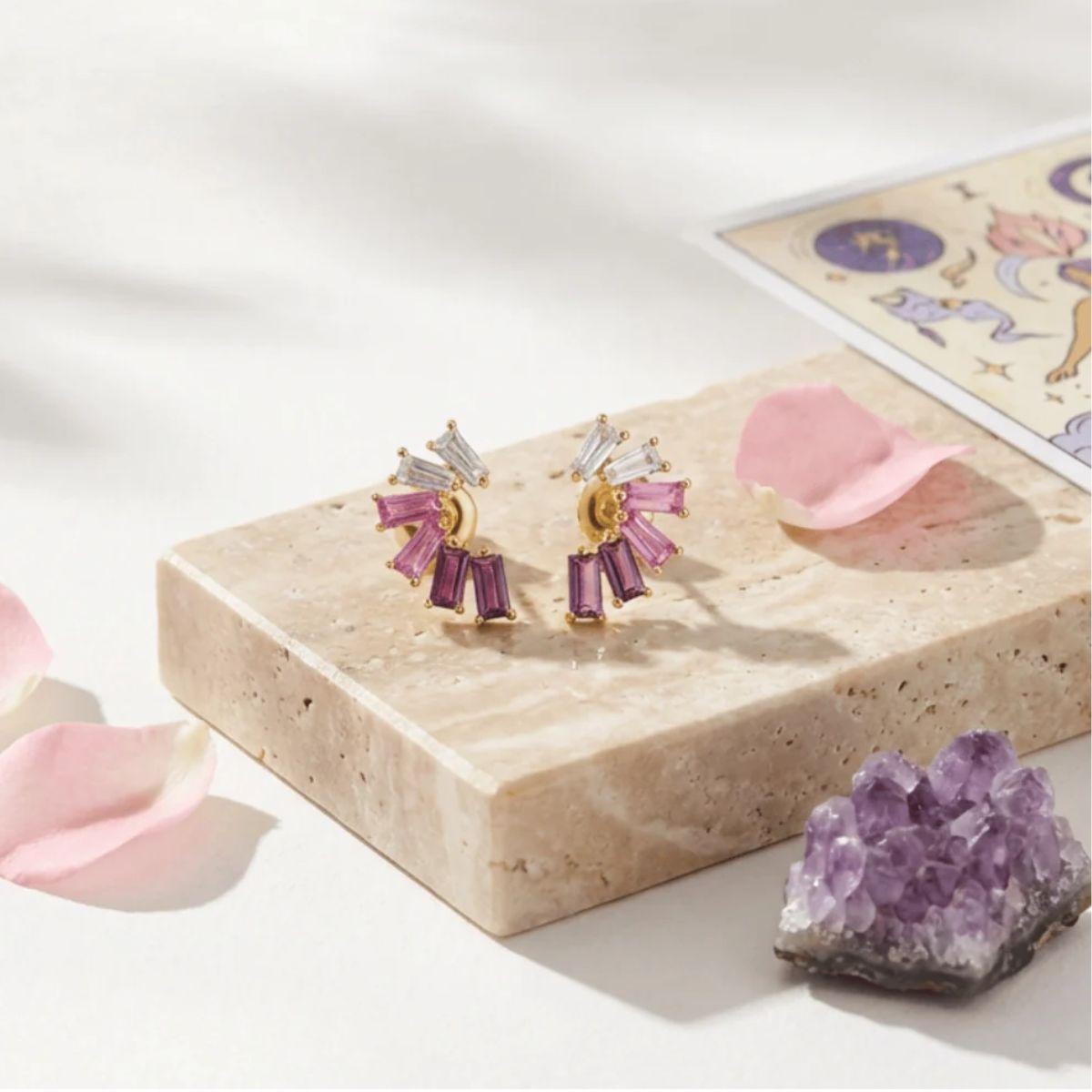
If you've ever paused mid-scroll and wondered, "Wait… are lab-created gemstones real?" you're not alone. It's one of the most common questions I get — especially when you're shopping for jewelry that's meant to mean something, not just look pretty.
Here's the reassuring truth: lab-grown crystals and gemstones can be real gemstones — same crystal structure, same chemical composition as mined stones. The difference is where they form, not whether they're "fake."
In this guide, I'll explain how lab-grown gemstones are made, what hydrothermal quartz is, how aura quartz gets its shine, and how to shop with total confidence — no geology degree required. If you're newer to stones in general, The Complete Crystal Guide is the place to start.
Quick Shop: Crystal Necklaces | Gemstone Jewelry | Exquisite Glass | Birthstones | Crystal Properties Guide
Jump To: Are They Real? | How They're Made | Ruby/Sapphire/Spinel | Hydrothermal Quartz | Aura Quartz | Rutilated Quartz | Glass | Lab vs Treated | How to Shop | FAQ

Are Lab-Grown Crystals and Gemstones Real?
Yes — when they're truly lab-grown. Lab-grown gemstones (also called lab-created or synthetic) are crystals produced in a controlled environment using the same crystal structure and same chemical composition as gemstones formed in the earth.
So why the confusion? Because the jewelry world also includes glass imitations, resins, coatings, and treatments — and people often lump everything together under the word "fake." That's not fair to shoppers, and it's not helpful for trust.
The quick truth (30 seconds):
- Lab-grown gemstones are real gemstones — they are crystals, not molded materials.
- They are not glass, resin, or plastic.
- Many people choose lab-grown stones intentionally for clarity, ethics, and affordability without sacrificing beauty.
If you choose jewelry by symbolism, energy, and meaning, this matters. Trust is part of the magic.
Where I stand on this
Some brands make a selling point of never touching a lab-grown stone. I understand the instinct, but I don't think purity is the promise that matters most — because you can't check it.
What you can check is whether a seller tells you plainly what you're holding. So that's the promise here: every piece says what it is. Genuine stone is labelled genuine. Hydro quartz is labelled hydro quartz. Glass is labelled glass, on the product page, in plain words, before you buy.
I sell all three, because they're good for different things and different budgets. What I don't do is let you find out afterwards.
How Lab-Grown Crystals and Gemstones Are Made (HPHT + CVD)
Lab-grown gemstones are created with processes designed to replicate natural crystal growth — just with the variables (heat, pressure, chemistry) carefully controlled.
High-Pressure High-Temperature (HPHT)
HPHT mimics the intense conditions found deep within the earth.
- Temperatures can exceed 1,300°C
- Pressure reaches tens of thousands of atmospheres
- Crystals grow around a "seed" over days to weeks (sometimes longer depending on the material)
This method is commonly used for lab-grown ruby, sapphire, spinel, and some diamonds. The results can have the same durability and hardness as their natural counterparts.
Chemical Vapor Deposition (CVD)
CVD is a modern crystal-growth method often used for diamonds.
- A sealed chamber is filled with carbon-rich gases
- Energy turns the gas into plasma
- Atoms deposit onto a seed crystal layer by layer
Important note: these processes build crystal structure — they aren't molding material into a shape.
Lab-Grown Ruby, Sapphire & Pink Spinel
Many vivid coloured gemstones are lab-grown to provide consistency, durability, and ethical sourcing.
Lab-Grown Ruby
Ruby is a variety of corundum colored by chromium. Lab-grown rubies share the same structure and hardness as natural rubies, often with cleaner color and fewer inclusions.
Lab-Grown Sapphire
Sapphires are also corundum and come in many colors — blue is the most recognized, but pink, yellow, green, and white sapphires are all real sapphire. Lab-grown sapphires can offer rich saturation without the environmental impact of mining.
Lab-Grown Pink Spinel
Spinel is a naturally occurring gemstone often mistaken historically for ruby — the famous Black Prince's "Ruby" in the British Crown Jewels turned out to be a spinel. Lab-grown pink spinel is valued for its brilliance, durability, and soft yet vibrant hue.
What Is Hydrothermal Quartz? The Lab-Grown Crystal, Explained
Hydrothermal quartz is genuine quartz. It's grown using a process that replicates how quartz forms in water-rich environments underground — which is why "hydrothermal quartz" is the most descriptive term for it.
How Hydrothermal Quartz Is Grown
- Quartz components are dissolved in a heated water solution
- High pressure allows crystals to slowly form over time
- Trace minerals may be introduced during growth to create color
The key point: the result is still quartz crystal — with clarity, durability, and consistent color throughout the stone.
You'll find it in pieces where a vivid, even colour is the whole point — the Emerald Green Snake Earrings use hydro quartz for exactly that reason, and the product page says so.

What Is Aura Quartz?
Aura quartz starts as real quartz — natural or lab-grown — and then receives a surface treatment that creates the distinctive iridescent or metallic sheen.
How Aura Quartz Is Created
- The quartz is placed in a vacuum chamber
- Metals such as titanium, gold, or platinum are vaporized
- The metal bonds to the surface at a molecular level
This treatment affects the surface — the shimmer is not part of the internal crystal structure. That doesn't make it "bad." It just means it deserves respectful care, similar to plated metals.
Can aura quartz get wet?
No — and I know this one first-hand. I once left pieces outside to cleanse for several days. It rained, then the Alberta sun came out hot. The amethyst faded. The aura quartz was destroyed outright — the shimmer stripped clean off, and it does not come back.
Because the finish is a bonded surface layer rather than part of the stone, water, weather and abrasion all take it away permanently. Cleanse aura quartz with smoke or sound only, and don't leave it outdoors. The full water-safety chart for every stone is in how to cleanse crystals safely.
For everyday care, see how to clean lab-grown gemstone jewelry, and how to cleanse your jewelry for rings and necklaces.

What Is Lab-Grown Rutilated Quartz?
Lab-grown rutilated quartz is quartz grown in a controlled environment where rutile-like inclusions are intentionally introduced during the crystal-growth process.
Unlike surface treatments, the rutilated effect in lab-grown rutilated quartz is:
- Internal to the stone
- Part of the crystal formation
- Not painted or coated
The result can resemble natural rutilated quartz — often with more consistent thread-like inclusions and clearer quartz. This is one reason lab-grown options can be so popular: they deliver the look while keeping designs durable and accessible. The rutilated quartz meaning guide covers how to tell natural from lab-grown by eye.
And What About Glass?
Glass is not a gemstone, and it isn't pretending to be one — as long as somebody says so.
It's chosen for three good reasons: vivid colour that no natural stone reliably delivers, light weight, and price. That combination makes it better than gemstone for some pieces — statement earrings especially, where a heavy natural stone drags on the earlobe by mid-afternoon.
My Exquisite range is faceted glass and labelled that way everywhere it appears. The Marquis Earrings and the Ombre Purple Necklace are both glass, both say so on the page, and both are lovely.
Bought knowingly, glass is a good choice. Bought thinking it's gemstone, it isn't. The difference is entirely down to whether you were told. For the side-by-side, see Glass or Crystal? The Difference, Explained.
Lab-Grown vs Treated vs Stabilized Stones
This is where a lot of "is it real?" confusion lives. Not everything is either "natural" or "fake." There are several legitimate categories — and the key is transparency.
Lab-Grown
- Stone is grown from scratch
- Same chemical composition as natural
- Colour and structure are internal
Color-Enhanced (Treated)
- Natural stones altered through heat, irradiation, or other common industry treatments
- Often stable and widely accepted in the jewelry industry
- Transparency matters
Stabilized
- Porous natural stones reinforced (often with resin) to improve durability
- Common with softer materials — turquoise is a classic example
None of these categories are automatically "bad." The difference is whether the treatment is internal or surface-applied, and whether the seller is clear about it.
How to Shop for Lab-Grown Crystals With Confidence — The 60-Second Checklist
- Ask what it is: natural, lab-grown, or glass. A good brand will tell you clearly.
- Ask what's internal vs surface: internal color and inclusions wear differently than a surface finish.
- Ask how it wears: is it suitable for everyday life — work, water, friction, cleaning?
- Ask about care: gentle cleaning and proper storage protect plated metals and specialty finishes.
- Ask what it means to you: symbolism and intention are the real magic. Origin is just one part of the story.
And the tell: a seller who knows their materials answers immediately and isn't offended you asked. Vagueness is itself an answer.

If you want to shop by meaning and intention, these are good starting points:
- Gemstone Jewelry — genuine stone
- Crystal Necklaces — everyday talismans
- Exquisite Glass — faceted glass, said out loud
✨ Not sure which stone you're shopping for? Take the free Gemstone Quiz: Find your stone →
Join The Circle — 15% off your first order (good 7 days) + the Birthday Club, plus the stone guides and moon notes before they hit the blog. No spam, just the occasional bit of magic.
Join The Circle here.
FAQ — Lab-Grown Crystals & Gemstones
Are lab-grown gemstones fake?
No. True lab-grown gemstones are crystals with the same chemical composition and crystal structure as mined gemstones. They're not glass or resin. The only difference is that they form in a controlled environment instead of in the earth.
Is hydrothermal quartz real quartz?
Yes. Hydrothermal quartz is genuine quartz grown under controlled conditions that replicate water-rich crystal formation underground. It has the same chemical composition (silicon dioxide), crystal structure, and durability as natural quartz.
Is aura quartz real?
Aura quartz starts as real quartz — natural or lab-grown — and receives a surface-bonded metallic finish for its signature shimmer. It's real quartz with a specialty surface treatment, similar in concept to plating on jewelry metals. The crystal underneath is genuine; the iridescent finish is what makes it visually distinctive.
Can aura quartz get wet?
No. The iridescent finish is a bonded layer of metal vapour on the surface, not part of the stone. Water, rain and weather strip it away permanently, and once the shimmer is gone it cannot be restored. Cleanse aura quartz with smoke or sound only, and never leave it outdoors overnight.
Are lab-grown gemstones cheaper than natural?
Generally, yes. Lab-grown gemstones often cost less than their natural counterparts because the supply is more controllable and there's no mining cost. The exact price difference varies by stone — lab-grown diamonds can be 40–60% less than natural, while lab-grown coloured stones like ruby and sapphire can be even more affordable. Quality, cut, and brand all still affect the final price.
Do lab-grown gemstones hold their value?
Lab-grown gemstones don't typically appreciate the way rare natural stones can, but most fine jewelry — natural or lab-grown — isn't bought as an investment. The value of a piece comes from craftsmanship, design, sentimental meaning, and how often you wear it. If you're choosing jewelry to wear, lab-grown stones offer real durability, real beauty, and real meaning at a more accessible price point.
How do I tell if a gemstone is lab-grown or natural?
Most lab-grown stones are visually identical to natural stones to the naked eye. The most reliable way to know is to ask the seller — reputable brands disclose this clearly. For high-value pieces, professional gemological labs can identify lab-grown stones using specialized equipment that detects subtle differences in inclusions, growth patterns, and trace elements. For most everyday jewelry, transparency from the seller is the key.
Which is better — lab-grown or natural gemstones?
Neither is universally "better." Natural stones carry the history of the earth and a kind of geological rarity. Lab-grown stones offer ethical sourcing, lower environmental impact, often cleaner clarity, and a more accessible price. The right choice depends on what matters to you. Many people happily wear both for different reasons.
Does lab-grown change the "meaning" of crystals?
Meaning comes from symbolism, intention, and how you choose to wear a piece — not only from where a stone formed. Many people choose lab-grown stones because sustainability and transparency are part of their values. The intention you bring to the jewelry is what makes it meaningful.
Are lab-grown gemstones ethical?
Lab-grown gemstones often have a smaller environmental footprint than mined stones — no extractive mining, less land disruption, and clearer supply chain transparency. They also avoid the human-rights concerns that can be associated with some mined gem sources. That said, lab-grown isn't automatically "perfect" — energy use in production matters too. The best ethical choice is one that's clearly sourced and clearly disclosed.
Final Thoughts
Natural stones carry history. Lab-grown stones carry intention. Glass carries colour, and treated stones carry artistry.
There is no single "best" gemstone — only what feels right for you, your values, and how you live. Understanding the differences simply gives you power: you get to choose jewelry you can wear with confidence.
As always: wear what you love, and the rest will follow.
Explore More
- The Complete Crystal Guide: Where to Start →
- Glass or Crystal? The Difference, Explained →
- Crystal Properties Guide →
- How to Cleanse Crystals Safely →
- How to Clean Gemstone Jewelry →
- Shop Gemstone Jewelry →
Designed in Calgary. Clearly labelled, always.


