

Still looking up. Still worth it.


Type: necklace
Rhombus Sun Moon Star Necklace


Type: necklace
Sun Medallion Necklace | 18K Gold PVD Stainless Steel Celestial Jewelry


Type: necklaces
Garnet Moon Necklace | Genuine Garnet & Brass Half Moon | As Seen on The Vampire Diaries


Type: jewelry sets
Sun, Moon & Star Celestial Jewellery Set | Waterproof


Type: earrings
Crescent Moon Star Stud Earrings | Gold Celestial Mini Studs


Type: necklace
Crescent Moon & Star Necklace | Gold or Silver Plated


Type: jewelry sets
The Blue Sun & Star | Turquoise Necklace & Ring Set


Type: Earrings
Crescent Druzy Moon Earrings | Gold Tassel Drop, Celestial Statement

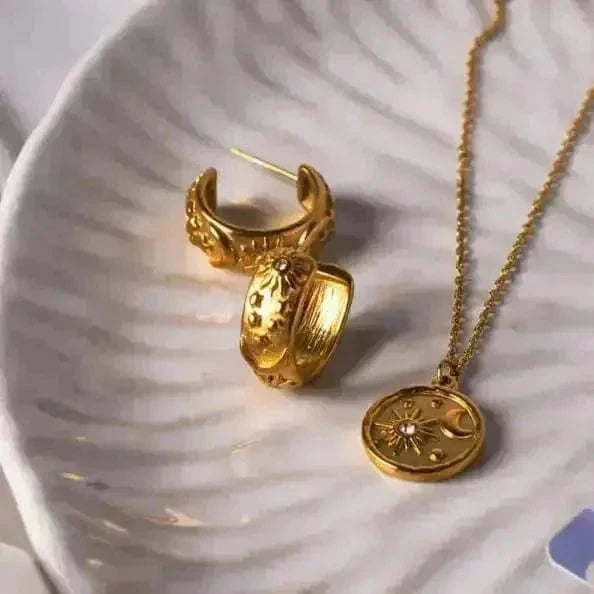
Type: earrings
Celestial Moon Earrings | Waterproof Stainless Steel (PVD Gold)


Type: earrings
Celestial Moonbeam 3D Earrings | Crescent Moon Statement Drops


Type: bracelet
Crescent Moon Bracelet | Adjustable Celestial Charm
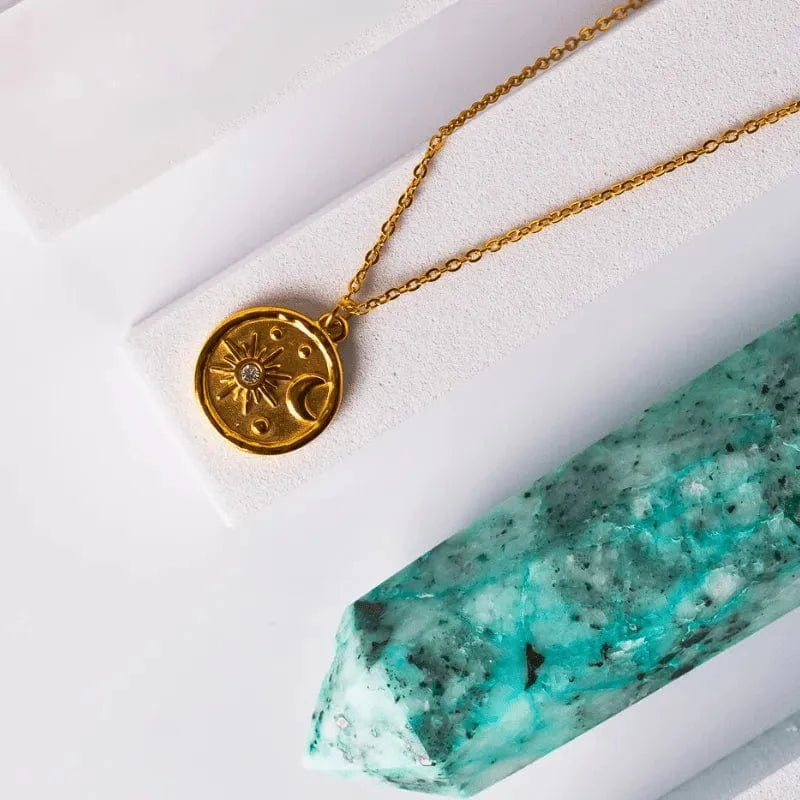
Type: necklace
Crescent Moon & Star Necklace | PVD Gold Stainless Steel


Type: necklaces
Star & Moon Rectangle Pendant Necklace | Waterproof Celestial CZ Charm


Type: necklace
Laluna Mother of Pearl Moon Necklace | Full Moon or Crescent


Type: necklace
Crescent Moon CZ Necklace | PVD Gold Stainless Steel
Why moon and star jewellery keeps coming back
Celestial imagery is the oldest decoration we have. Crescents turn up on Bronze Age pendants, stars on Roman rings, suns on nearly everything. The reason it never fully goes out of fashion is that it isn't really fashion — it's the one set of symbols every culture on Earth arrived at independently, because everybody had the same sky.
Worn now, it reads as quiet rather than loud. A crescent at the collarbone says something without announcing what.
The three shapes, and what they carry
- Crescent moon — cycles, intuition, and the reminder that things change on a schedule whether or not you approve of it. The most-worn shape here.
- Star — direction. Historically a navigation symbol before it was a decorative one, which is a better reason to wear it than most.
- Sun — vitality and visibility. The counterweight, and the one most people buy second.
Layering all three is common and reads as deliberate rather than cluttered, particularly at staggered chain lengths.
The stones that suit it
Moonstone is the obvious pairing and the most-asked-for — the blue-white flash under the surface is called adularescence, and it's a real optical effect, not a coating. Labradorite does something similar in blue and gold. Clear quartz and white topaz stand in for starlight when you want the sparkle without the colour. If you want the stone rather than the shape, start with moonstone jewellery.
Wearing it to a moon
Plenty of people here time a piece to a full moon, a new moon or an eclipse. There's no requirement to, and nothing stops working if you don't. If you want the practice rather than just the piece, our moon ritual guides cover what to do on each phase in about twenty minutes, with nothing you'd need to buy. Eclipse-specific stones live in blood moon jewellery.
What you're buying
Sterling silver or gold plate over base metal — each listing states which, and plate is never priced as though it were solid. Stones are genuine unless a listing says dyed, treated or lab-grown, and where that applies we say so on the product page rather than leaving you to work it out.
Moonstone is softer than it looks, around 6 on Mohs, and it has cleavage planes — it will chip on a hard knock. It's a lovely everyday piece and a bad gardening piece. Our cleansing guide covers the moon-water question, including which stones should never be left out in it.
Mystic Soul Jewelry — Canadian small business, Calgary, Alberta, since 2008.
Common questions
What does a crescent moon necklace symbolise?
Cycles, intuition and change. It's the most widely worn celestial shape and it carries meaning without signalling a particular belief.
Can I wear moon and sun pieces together?
Yes, and it's a deliberate pairing rather than a contradiction — the two are traditionally read as a balance. Staggered chain lengths keep it from looking crowded.
Is moonstone actually connected to the moon?
Only by name and by the way it looks. The blue-white shimmer is adularescence, an optical effect from the stone's internal structure. The association is old, poetic and not geological.
Do I have to charge celestial jewellery under a full moon?
No. Some people like the ritual, which is a fine reason to do it. Just check the stone first — selenite dissolves in water and porous or dyed stones don't enjoy dew either.
Is this a good gift if I don't know their beliefs?
One of the safest. A crescent or a star reads as celestial rather than religious, so it doesn't assume anything about the person wearing it.
Will the gold plating last?
It wears eventually on any plated piece, faster with perfume, hairspray and sweat. Sterling silver tarnishes instead, and polishes back. Both are covered in our cleaning guide.