

The question I get more than any other, by a wide margin: “How do I clear my necklace? It just feels off.”
Not broken. Not tarnished. Off. And I know exactly what she means — a piece you wear every day sits against you through every conversation, every commute, every hard Tuesday. It collects the week. Cleansing it is how you put the week down.
This guide is for cleansing finished jewelry — a ring, a necklace, a pair of studs, anything set in metal on a chain. That distinction matters more than it sounds, because a good half of what the internet recommends for crystals will quietly destroy a chain.
Cleansing a loose stone instead? Different rules — see which crystals can’t get wet, which has the full water-safety chart. Want to physically clean tarnish or bring back shine? That’s how to clean jewelry, metal by metal. Two different jobs.

First: can your piece get wet?
Start here, because water is the method everyone reaches for first and the one most likely to cost you the piece.
With finished jewelry there are two things to protect — the stone and the setting it lives in. Even when a stone is perfectly water-safe, water isn’t. It creeps into the setting, tarnishes sterling from the inside, and thins gold plating until the base metal shows through. Showering in your jewelry is the fastest way to age it.
Some stones can’t go near water at all — selenite dissolves outright. Check yours on the water-safety chart before anything gets wet. Better still, skip water entirely. Every method below is dry, and dry methods work on everything.
How to cleanse a ring
Rings take the most contact of anything you own. Hands in soap, hands in dirt, hands in other people’s days. They also have the most places for residue to hide — under the stone, behind the setting, inside the band.
- Take it off and wipe it with a soft dry cloth first. Physical residue and energetic residue are different problems, but clearing one makes the other feel like it worked.
- Pass it slowly through smoke, turning it so the smoke reaches under the setting and inside the band — not just the top.
- Hold it a moment before you put it back on. Name what you’re setting down. Out loud is better; nobody’s listening.
Never soak a ring, especially one with a glued setting — soaking loosens the adhesive and the stone comes out somewhere you won’t notice until it’s gone.
How to cleanse a necklace
A necklace sits over the heart and throat all day, which is exactly why it’s usually the piece that starts to feel heavy first.
Lay it out flat rather than dangling it — a chain in a heap cleanses unevenly and tangles while it sits. On a windowsill in moonlight, or on a cloth beside a singing bowl, laid open in a long line.
If it’s a pendant on a delicate chain, handle the pendant and let the chain follow. Chains stretch when you pull them, and a stretched chain is how clasps fail.
How to clear negative energy from gold jewelry
Gold — plated, filled, or solid — has one rule that matters above all others: never use salt.
Salt cleansing is everywhere online, and on a raw quartz point it’s fine. On gold it is corrosive. It pits plating, eats into the finish, and there is no undoing it. Same for gold-filled and gold-vermeil pieces, and the same for sterling.
What works on gold instead:
- Smoke — completely dry, no residue, no reaction. The safest choice for any plated piece.
- Sound — never touches the metal at all.
- Moonlight — no heat, no moisture, no fading.
My Raw Black Tourmaline Studs are 14K gold-filled — a good example of a piece where smoke is the only method I’d use on it.
Three methods that are safe for metal
Moonlight
The most forgiving option, and my default for anything set in metal. No moisture, no salt, no abrasion, nothing to go wrong.
- Lay pieces on a natural surface — wood, stone, or a cloth — on a windowsill or outside.
- Put them out around moonrise. A Full Moon is traditional; any clear night does the job.
- Bring them in before direct morning sun. This is the step people skip. Amethyst, rose quartz, citrine and fluorite all fade in sunlight, and fading is permanent.
A story, so you don’t repeat mine: I once left pieces out for days, through rain and then hot Alberta sun. The amethyst faded. The aura quartz was destroyed outright. Overnight, then in — that’s the whole rule.
To time it to the lunar cycle, the new moon ritual guide pairs cleansing with intention-setting.

Sacred smoke
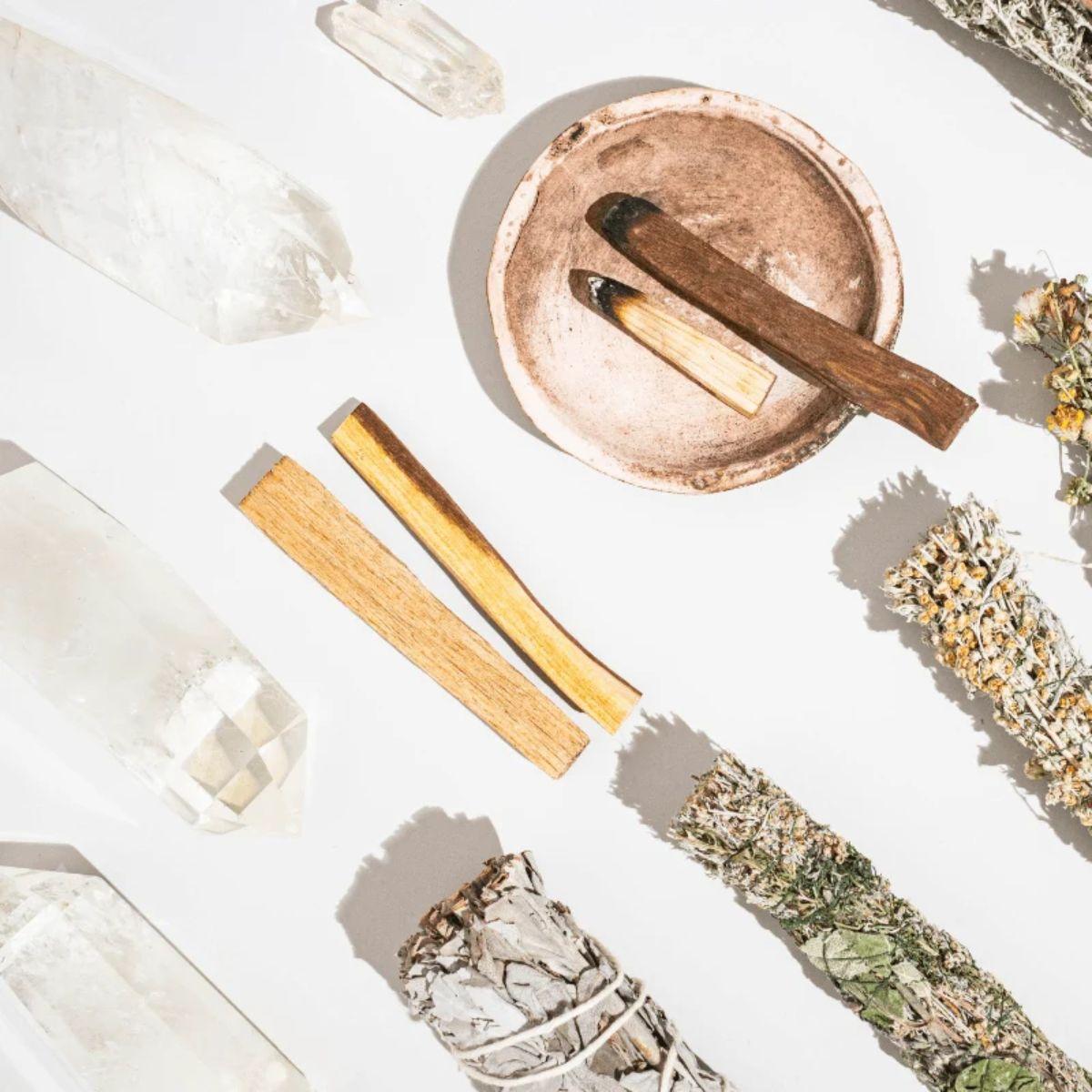
Sage, palo santo, cedar, sweetgrass, or plain incense. Dry, fast, and safe on every stone and every setting — which makes it the workhorse for jewelry.
- Light it, let it catch, then blow out the flame so it smolders.
- Pass each piece slowly through the smoke, turning it so every side gets there.
- Say something plain as you go. “I’m setting this down clear.” No script required.
Keep opals and other delicate stones away from direct heat — smoke only, never flame.
One note worth carrying: white sage and sweetgrass are sacred to Indigenous traditions. If that isn’t your lineage, palo santo and cedar are respectful alternatives, and where you source them matters.
Sound
The gentlest of the three, because nothing physically touches the piece. Ideal for anything soft, porous, strung on silk, or older than you are.
- Use a singing bowl, tuning fork, or bell.
- Set the piece beside the sound source, or hold it near.
- Let the tone ring out fully two or three times. That’s it.
Soft stones need a gentler hand
Some stones ask for more care than the rest, and they’re often the ones people wear daily without realising.
Moonstone is the one I’m asked about most. It’s soft, faintly porous, and its shimmer is layered structure — abrasives dull it and water seeps in. Sound or smoke only, never salt, never soaking. Wipe it dry after wearing and it keeps that glow for decades. My Faceted Rainbow Moonstone Bracelet is a good candidate for the sound method.
Pearl, opal and amber are organic and the strictest of all — no cleaner, no soaking, no salt. Soft cloth, then sound.
Black onyx and black tourmaline are the opposite: hardy, grounding, and happy with any dry method. The Black Onyx Studs handle smoke, sound or moonlight equally well.
Not sure how hard your stone is? How to store jewelry has a hardness chart showing which stones scratch which.
How often should you cleanse jewelry?
Less often than the internet implies. Consistency beats intensity.
- Daily — wipe with a soft cloth, store it dry. Set your intention as you put it on. That is the practice.
- Weekly — a quick smoke, sound, or moonlight pass. Whichever fits the week you had.
- Monthly — a deeper reset, often near the Full Moon.
- Whenever it feels heavy — the honest answer. You’ll know.
And if a piece has stopped feeling like yours entirely, that’s worth noticing too. People’s stones change when their chapters do.
Cleansed it and it still feels off?
Maybe it’s not the piece — maybe it’s the stone. The Gemstone Quiz takes about a minute and matches you to the one for the chapter you’re in now.
The stone doesn’t do the work. You do.
That’s the whole philosophy here, and I’d rather say it plainly than dress it up. A cleansed piece isn’t a battery you recharged. It’s a reminder you kept sharp. The ritual of looking after it is really the ritual of looking after yourself — on purpose, on a Tuesday, when nobody’s watching.
If it’s heavy energy you keep clearing, start with protection jewelry. Or browse the full gemstone collection, and the chakra collection if you’re working with energy centres.
Cleansing jewelry FAQ
How do you spiritually cleanse jewelry?
Smoke, sound, or moonlight — all three are dry, so none of them risk the metal or the setting. Pass the piece through smoke, rest it beside a singing bowl, or leave it out overnight under the moon and bring it in before direct sun. Avoid water and salt on anything set in metal.
How do I clear negative energy from a ring?
Take it off, wipe it with a dry cloth, then pass it slowly through smoke — turning it so the smoke reaches under the setting and inside the band, not just the top. Hold it a moment before putting it back on and name what you’re setting down.
Can I cleanse jewelry in water?
Better not. Even when the stone is water-safe, moisture works into the setting, tarnishes sterling and wears gold plating thin. Some stones can’t get wet at all — check yours on the water-safety chart. Dry methods work on everything.
Does salt damage jewelry?
Yes. Salt corrodes metal, pits plating and degrades chains, and the damage doesn’t come back out. It’s fine on hard raw stones like quartz points — never on a finished piece.
How do I cleanse a moonstone?
Sound or smoke, and nothing else. Moonstone is soft and faintly porous, so salt scratches it, water seeps in, and abrasives dull the shimmer. Wipe it dry after wearing and it keeps its glow for decades.
How often should I cleanse my jewelry?
A light cleanse weekly and a deeper reset monthly suits most people, with a daily wipe and dry storage in between. Beyond that, whenever a piece starts to feel heavy — which is a real signal, not a superstition.
Keep reading:


