

Everything in this guide, by collection:
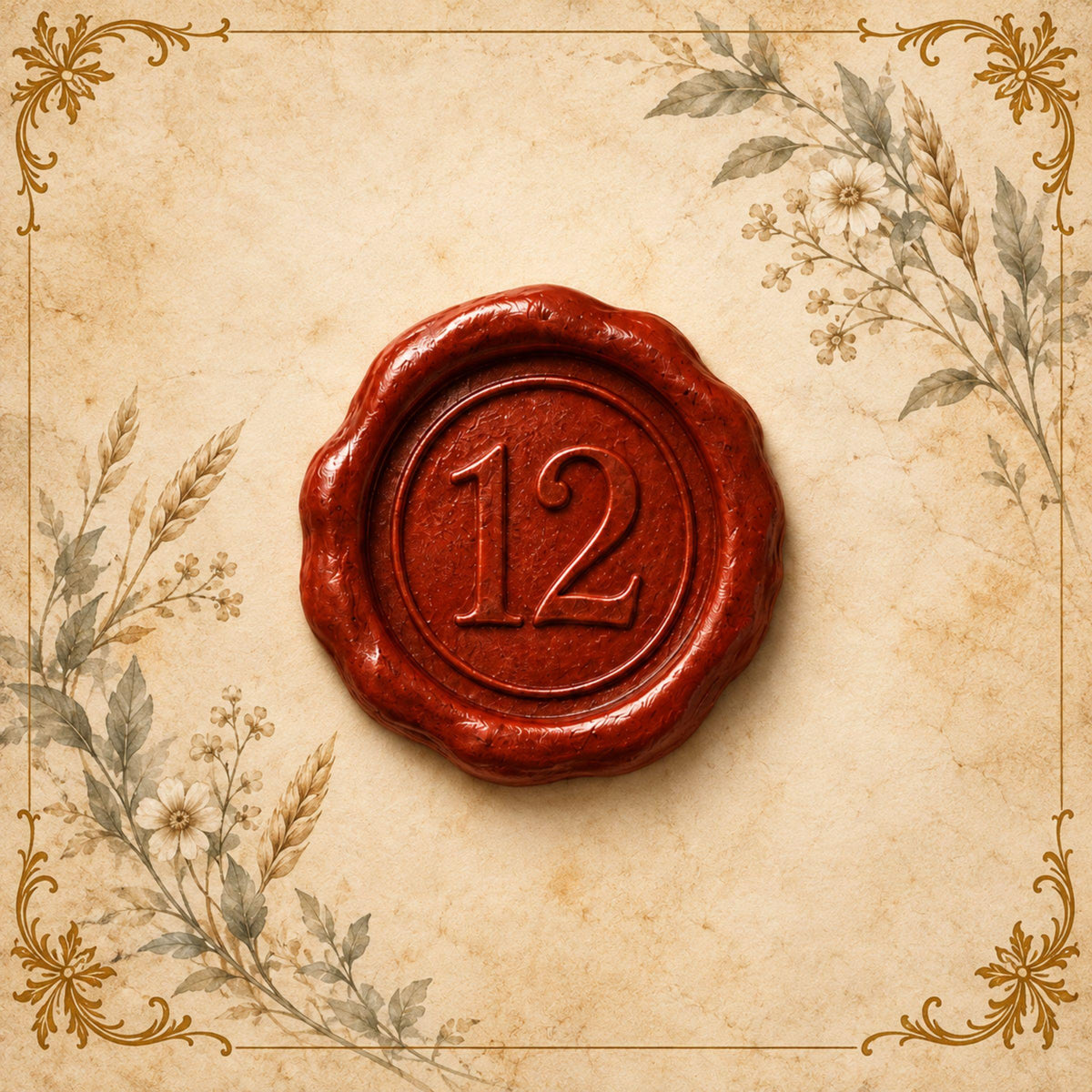
I laid twelve symbols out on the table and covered one with a wax seal.
Not as a trick. Because eleven of them you can look at and mostly know, and the twelfth is the one I get asked about more than the other eleven put together — and I wanted to see whether anyone would guess it before I said it.
Here is the whole set. What each one has meant, across the traditions that arrived at it independently, and what it tends to mean now on a woman in her fifties who has been through a few chapters and would like something on her collarbone that says so.
Eleven of these I carry. One I don't — and I'll say plainly which, because the point of this guide is the meaning, not the sale. Mystic Soul Jewelry, Calgary, Alberta, since 2008.

🌳 Tree of Life — roots and branches, the same work in both directions
The Tree of Life turns up in Celtic, Norse, Egyptian, Jewish and Buddhist traditions with no borrowing between them, which tells you how obvious the metaphor becomes the moment you've stood under a big tree. Roots go down as far as the branches go up. Nothing you can see is holding it there.
In Celtic tradition it joined the underworld, the earth and the sky. In Kabbalah it maps the structure of creation itself. Every version lands on the same claim: growth in one direction is paid for by depth in the other, and the part nobody sees is doing most of the work.
Wear it when: you're building something slowly and need the reminder that invisible effort counts. Or when family — the one you were born into or the one you assembled — is the thing sitting on your mind.
Pairs with: Green Aventurine, Moss Agate, Smoky Quartz.
Full guide: Tree of Life Meaning → · Shop it: Tree of Life jewellery →

🦋 Butterfly — transformation, and the chapter that ended
The butterfly is the only symbol here that requires the death of the previous version to work. Inside the chrysalis the caterpillar doesn't sprout wings — it dissolves. Almost entirely. What rebuilds is made from the liquid remains of what it was.
Which is a considerably more brutal metaphor than the one usually printed on inspirational mugs, and considerably more accurate to how transformation goes. In Greek, psyche means both butterfly and soul. In Mexican tradition, monarchs returning each autumn are the returning dead. In Chinese symbolism, a pair means love that lasted.
The women who reach for a butterfly are almost never at the start of the change. They're on the other side of one, and they'd like something that acknowledges it happened.
Wear it when: the hard part is behind you and nobody threw you a party for it.
Pairs with: Amethyst, Moonstone, Labradorite.
Shop it: Butterfly jewellery →

♾️ Infinity — no beginning, no end, no exit
The simplest shape here and the one people buy for somebody else more than any other. A single line that crosses itself and comes back, with no point at which it becomes a different line.
As mathematics it's only a few centuries old. As an idea it's much older and closely related to the Endless Knot of Tibetan Buddhism — the interweaving of things that can't be pulled apart without destroying both. In modern use it's become shorthand for the love that has no start date. Partners, yes, but far more often mothers and daughters, and the friend who has been there since 1994.
Wear it when: you want to carry a connection without announcing it to a room.
Pairs with: Rose Quartz, Garnet, Moonstone.
Full guide: Infinity Symbol Meaning → · Shop it: Infinity jewellery →

🔢 Eleven Eleven — the number that keeps finding you
Every other symbol on this page, you go and look for. Numbers do it the other way round. 11:11 on the clock, twice in a day, for a fortnight. 333 on a receipt. 222 on the car in front, three mornings running, until you stop calling it nothing.
Repeating sequences carry fairly consistent readings across numerology: 111 for beginnings, 222 for trust and partnership, 333 for creative alignment, 444 for coming back to yourself, 555 for change already underway. 11:11 is the doorway one — the moment the gap between where you are and where you're going is briefly thin.
Worn as jewellery, a number is the most private symbol there is. Nobody reads it across a room. You know what it says, and that is entirely the point.
Wear it when: the same number has turned up often enough that you've stopped pretending you didn't notice.
Pairs with: Clear Quartz, Amethyst, Citrine.
Full guide: Angel Numbers and Jewellery → · Shop it: Angel Number jewellery →

Not sure which symbol is for the chapter you're in?
The Gemstone Quiz takes 60 seconds and matches you to the stone — and the intention — that fits right now.
→ Take the Gemstone Quiz
🌙 Crescent Moon — cycles, intuition, the waiting part
A full moon is an event. A crescent is the rest of it — the long unglamorous stretch where something is either building or letting go and there is nothing to do but let it.
Waxing crescent is intention set and not yet grown. Waning crescent is release already underway. Both are the same shape and mean opposite things depending on which side the light sits, which is either very poetic or very inconvenient, and I've decided it's both.
This is the symbol for the woman who is mid-something. Not at the start where it's exciting, not at the end where you get to tell the story. The middle, where most of life happens.
Wear it when: you're waiting on something you can't hurry.
Pairs with: Moonstone, Labradorite, Selenite.
Shop it: Celestial jewellery →

🪶 Feather — lightness, courage, a message received
In ancient Egypt the heart of the dead was weighed against the feather of Ma'at. Lighter than the feather and you passed. Heavier — weighed down by what you'd done — and you did not. It is the oldest surviving version of the idea that a clear conscience is physically lighter.
Across many North American Indigenous traditions the feather carries meanings that differ significantly between nations and are not interchangeable with the folk reading. In the broader folk tradition a found feather is taken as a sign that something passed through and left a trace.
Note the difference from the wing, because it matters if you're choosing a gift: a feather is was here. A wing is is here. One is a trace, the other is company.
Wear it when: you're putting something down. Or when you'd like to be braver than you currently feel.
Pairs with: Clear Quartz, Amazonite, Blue Lace Agate.
Shop it: Bird & Feather jewellery →

🌀 Spiral — growth that circles back before it climbs
The spiral is the oldest symbol humans have left behind. It is carved into the entrance stone at Newgrange in Ireland, cut around 3200 BCE — older than Stonehenge, older than the pyramids. It appears in Neolithic Europe, in Celtic metalwork, in Māori koru, in Hopi rock carvings, on every continent people reached.
Nobody agreed on it. Everybody arrived at it. Probably because it's the shape growth makes: not a line upward, but a return that lands slightly higher each time. You come back to the same argument, the same fear, the same October — and you're not quite where you were.
It is the most honest symbol on this page and the least flattering, which is why I like it.
Wear it when: you're back at something you thought you'd finished and would like to be told that isn't failure.
Pairs with: Moss Agate, Smoky Quartz, Moonstone.
Shop it: Spiral Ring →

💛 Heart Locket — what you keep, and who you keep it for
A locket is the only symbol here that is also a container. Everything else points at a meaning; a locket holds one, physically, and doesn't tell anybody what it is.
They came into their own in the Victorian era as mourning jewellery — a photograph, a curl of hair, a folded note — and the Victorians were, whatever else you say about them, unembarrassed about grief in a way we've largely lost. A locket is a small argument that carrying someone is normal and ongoing rather than a phase you complete.
What goes inside now: a photo, still. A scrap of handwriting. A word. One woman told me hers holds a receipt, and would not tell me what for.
Wear it when: the thing you're carrying isn't anybody else's business.
Pairs with: Rose Quartz, Garnet, Pearl.
Shop it: Heart Locket Necklace → · The prayer wheel pieces open too, and hold a mantra instead of a photo: Prayer Wheel jewellery →

🪲 Scarab — rebirth, protection, the long game
The Egyptians watched dung beetles roll a ball across the sand and decided the sun was moved the same way — pushed across the sky each morning by a god in beetle form, Khepri, whose name means to come into being. The beetle's young emerged from the buried ball, apparently from nothing, which sealed it: the scarab became the symbol of self-creation and return.
Scarab amulets were placed over the hearts of the dead, carved with instructions to the heart not to testify against its owner at the weighing. They are among the most numerous objects to survive from the ancient world, which is its own kind of joke about permanence.
It is the least fashionable symbol on this page and one of the most serious. Rebirth, but the slow structural kind — not a fresh start, a rebuild.
Wear it when: you're doing something that will take years and would like it acknowledged now.
Pairs with: Malachite, Lapis Lazuli, Carnelian.
Shop it: Scarab jewellery →

🔺 Celtic Knot — one unbroken line, no seam
Look closely at a true Celtic knot and you'll find no start and no finish. It's a single strand, folded over itself, with no join anywhere. Mediaeval Irish and Scottish monks worked them into manuscript margins and stone crosses, and the interlace is deliberate: eternity drawn as a line that never has to end because it never began.
The triquetra — the three-cornered version — carried meanings before Christianity reached Ireland and picked up more afterwards. Maiden, mother, crone. Land, sea, sky. Later, the Trinity. The shape absorbed each without discarding the last, which is fairly Irish of it.
Wear it when: you want to mark something continuous — a lineage, a marriage, a self that has survived several versions.
Pairs with: Moss Agate, Emerald, Clear Quartz.
Not currently in the collection.
👁️ Third Eye — seeing the thing before it is said
The Third Eye is the sixth chakra — Ajna, the space between the brows. In Eastern traditions it's the seat of perception beyond the five senses: the knowing that shows up before the reasoning catches up to it.
You recognise it by the rays. A Third Eye is drawn as a single eye with sunburst lines radiating outward — light coming from the eye. That's the whole difference from the Evil Eye, which has concentric circles and deflects light rather than casting it. It's the question I'm asked most, and now you'll never unsee it.
Wear it when: you already know the answer and keep talking yourself out of it. When you're learning to trust the first instinct instead of the fourth opinion.
Pairs with: Amethyst, Lapis Lazuli, Labradorite.
Full guide: Third Eye Jewellery → · Shop it: Third Eye jewellery →

🕊️ The Twelfth — Angel Wing
Here's the one under the seal.
I left it for last because it's the only symbol here that isn't about you and something larger. Every other one on this page — the tree, the spiral, the knot, the moon — is about you and the shape of a life. The wing is about you and one specific person.
Wings are ancient and they're everywhere: Isis with her arms outstretched over the dead, protecting rather than flying. Ma'at's single feather. Nike as winged victory. Hermes with wings at the heels because he carries messages between worlds. The Christian angel arrives late and inherits all of it. What every version agrees on is the same claim — something is closer than it looks.
And here is the thing I noticed at market tables and couldn't stop noticing. A woman picks up an angel wing, holds it a second longer than she held the others, and buys it for someone else. Then, often within the same season, she comes back and buys one for herself.
Nobody does that with a lotus.
It isn't only for grief — that's about half. The rest are carrying someone still living and struggling: a daughter in a bad year, a friend mid-diagnosis. Worry, made wearable, so it has somewhere to go other than 3am. And a third group who bought one for a sister and discovered afterwards that they'd wanted one all along.
Wear it when: there's a name you're carrying. Say it out loud or don't — the wing doesn't require you to explain.
Pairs with: Moonstone, Rose Quartz, Amethyst, Labradorite.
Giving one: write the name on the card. Four words and a name is enough, and it's the difference between a nice necklace and something she'll still have in fifteen years. And don't wait for the funeral — the wing that arrives three months later, when everyone has stopped calling, does far more work than the one that arrives in the week of casseroles.
Shop it: Angel Wing jewellery →

Twelve symbols, one thread
Twelve symbols. A dozen cultures that mostly never met. Thousands of years.
Every one of them is saying something about the same short list of human things. You are protected. You are connected. You are in motion and the motion means something. Something is closer than it looks.
You don't need to practise Zen Buddhism to feel what a spiral is pointing at. You don't need to read hieroglyphs to feel what a scarab means. The symbols do the pointing. You bring the meaning — and the ones that keep catching your eye are already telling you which chapter you're in.
Eleven of these have something waiting in the shop. One — the Celtic knot — doesn't, yet. If that's the one you keep coming back to, tell me. That's how the bench list gets written.
Because you deserve to know what your jewellery means.
Not sure which piece is yours right now?
Take the Gemstone Quiz — 60 seconds, tells you which stone fits the chapter you're in. Or if chakra energy is calling you, the Chakra Quiz will point you there.
Mystic Soul Jewelry — Canadian small business, Calgary, Alberta, since 2008.
The symbol guides, free.
What each one means, where it came from, and why it keeps turning up in front of you — sent straight to your inbox. Get the symbol guides here.
Frequently Asked Questions
What does an angel wing necklace mean?
An angel wing worn as jewellery most often means presence — the sense that one specific person is still with you, whether they have died, are far away, or are going through something hard. Unlike most spiritual symbols, which are about you and something larger, the wing is about you and a named individual. It is also worn with no name attached, simply as a reminder of being watched over.
What is the difference between a feather and an angel wing?
A feather is a trace — something passed through and left a sign. A wing is company — someone is with you. The feather is the lighter of the two, associated with courage, release and a clear conscience; the Egyptian feather of Ma'at was weighed against the heart of the dead. The wing carries a specific person and is the one more often given as a memorial gift.
What does the spiral symbol mean?
The spiral is the oldest known human symbol, carved at Newgrange in Ireland around 3200 BCE and appearing independently across Neolithic Europe, Celtic metalwork, Māori koru and Hopi carvings. It represents growth that returns before it climbs — coming back to the same point at a slightly different height, rather than progressing in a straight line.
What does a scarab symbolise?
Rebirth, self-creation and protection. In Egyptian belief the god Khepri pushed the sun across the sky as a beetle rolls a ball, and the young emerging from the buried ball made the scarab a symbol of coming into being from nothing. Scarab amulets were placed over the hearts of the dead as protection at judgement.
What is the difference between the Evil Eye and the Third Eye?
Different symbols, different origins. The Evil Eye (Nazar) is a Mediterranean and Middle Eastern protection amulet, recognisable by concentric blue circles, and it deflects harm. The Third Eye is an Eastern intuition symbol, drawn with sunburst rays radiating outward, and it is about inner knowing. Concentric circles means Evil Eye. Rays means Third Eye.
Is it disrespectful to wear symbols from other cultures?
It's a question worth taking seriously, and there is no single answer covering all twelve. What matters is intention and understanding. Wearing a symbol because it's pretty, with no idea what it carries, is different from wearing it because you know its history and feel a genuine resonance. This guide exists for that reason. Some symbols — particularly feathers in Indigenous traditions — carry specific meanings within specific nations that are not interchangeable, and are worth researching before wearing.
Can I wear more than one symbol at once?
Yes, and many people do — layering symbols is a way of carrying several intentions together. The only thing worth avoiding is wearing symbols whose meanings pull against the direction you're moving in. Otherwise wear what calls to you, and know what each piece is doing.


