

Four places most people start:
 Tree of Life Long Earrings$30
 Crystal Tree of Life Necklace$45
 Tree of Life Crystal Halo Necklace$45
 Tree of Life Bracelet$35
Shop Tree of Life jewelry Shop the gift guide
What the Tree of Life really symbolizes — roots, growth, resilience — told by a woman whose own family tree lost a whole side and grew back anyway.
The Tree of Life has been in my collection since the very beginning. It's one of my best-selling designs, it's the piece that got an Editor's "Best Pick" in Ottawa Life Magazine, it's even been on the $100,000 Pyramid. But that's not why I keep coming back to it.
I keep coming back because I lived it.
Let me tell you what this symbol means — the roots, the branches, the storms — and why, after all these years, it's the one I'd point you to if your own tree has been through something. It's one of the symbols in the sacred symbols guide.

What the Tree of Life Symbolizes
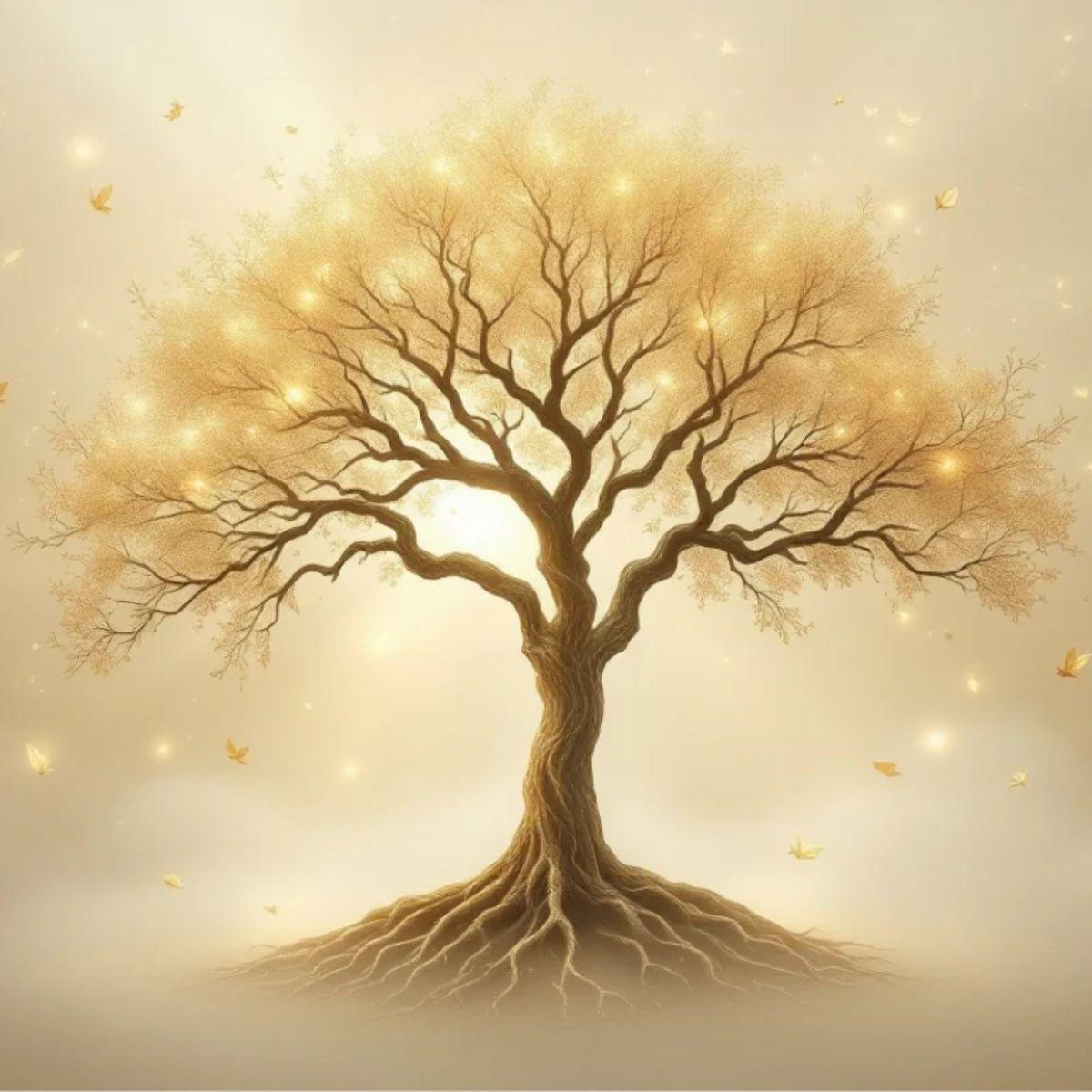
Across almost every culture that's ever existed, the Tree of Life means the same handful of things: roots in the past, growth toward the future, and the quiet strength to survive the seasons in between.
The roots are where you come from. Your history, your lineage, the ground you grew out of — the good and the hard of it.
The branches are where you're going. What's still possible. The reaching, the becoming, the version of you that hasn't fully arrived yet.
The trunk is you, right now — the steady middle that holds roots and branches together, that bends in the wind without snapping.
Customers connect with it because it says something true and comforting at once: you can be rooted in your past and still growing into your future. Both. Always. That's the whole symbol.
Where the Tree of Life Comes From
Nobody owns this one. It turns up in Celtic, Norse, Egyptian, Jewish and Buddhist traditions, mostly independently, which tells you how obvious the metaphor is once you've stood under a big tree.
In Celtic tradition the tree joined the underworld, the earth and the sky. In Norse myth, the ash Yggdrasil holds the worlds together in its roots and branches. In Kabbalah, the Tree of Life maps the structure of creation. In Buddhism, the Buddha woke up under a tree, and the Bodhi tree is still honoured for it.
Every version lands on the same claim: growth in one direction takes depth in the other, and the part nobody sees is doing most of the work.
The common mix-up: a Tree of Life is not a family tree diagram, though it carries a lot of the same feeling. And in Genesis it's a different tree from the Tree of Knowledge. Eden had both. The famous apple belongs to the other one.
The Trees That Taught Me
There's a place on Salt Spring Island, on the west coast, where my parents have a cabin. It's full of giant cedars — the old, wise kind, the ones that were standing long before any of us and will be standing long after.
I walk among them when I need to. I put my hands right on the bark and I thank them, because they feel so willing to take my heavy energy and hold it, the way something that big and that old can. They don't rush me. They don't fix me. They just stand there being ancient and patient while I sort myself out. If you've ever done this, you know it isn't silly. It's one of the most grounding things I know.
Those cedars are where I really understood the Tree of Life. Not as a pretty motif — as a practice. Roots deep, branches high, absorbing the storm and staying put.
When My Own Tree Went Through a Storm
I'll be honest with you, because you'd know if I wasn't.
My family tree changed enormously during my divorce. An entire side of the family left my life — and my kids' lives — all at once. If you've been through it, you don't need me to describe the particular grief of a branch you thought was permanent just… gone.
But here's what I learned, and it's the reason I still make this necklace.
My tree kept its roots. The storm took branches. It did not take the roots. And it turns out a tree that keeps its roots can lose an astonishing amount up top and still come back.
It came back the way any tree or plant does. You get rid of the unhealthy growth — you deadhead, you cut it back to the core, hard, further than feels comfortable. Then you give it the basics: good nutrients, time, and sunshine. And you wait. And the growth comes back. My branches are green again. There are new sprouts on a tree I genuinely thought was done growing.
That's not a metaphor I reach for to sell a necklace. It's the actual shape of the last several years of my life. The Tree of Life is the piece I made for exactly this — and if your tree has been through its own storm, it's the one I'd hand you.

This is the whole post, really.
Not sure which stone is for the chapter you're in?
The Gemstone Quiz takes 60 seconds.
Take the Gemstone Quiz →
Why Women Wear the Tree of Life
You don't have to have been through a divorce to feel this symbol. It's for anyone in a season of roots and growth at once:
- The rebuilder. Cut back to the core, growing again. The Tree of Life is worn as the reminder that the sprouts are coming.
- The matriarch. The one who is the roots now — the grandmother, the mother, the one the family grows out of. Worn as a quiet acknowledgment of that role.
- The one honoring where she came from. Roots in the past, even a complicated past, are still roots. Worn to hold the whole history, not just the easy parts.
- The gift-giver. For a daughter starting over, a friend rebuilding, a mother who held it all together — the Tree of Life says your roots held, and you grew anyway. Few gifts say more.
If it's a gift and you're unsure of length, necklace length covers what each one lands on. More ideas by meaning are in the gift guide.
How to Wear It (and a Goodbye)
A gentle heads-up: the classic Crystal Tree of Life Necklace is retiring from the collection. It's had a long, good run — Ottawa Life, the $100,000 Pyramid, years of being one of my best sellers. But everything moves in seasons, including a collection, and this one's leaving. If it's been on your mind, this is your nudge.
- Earrings. The Tree of Life Long Earrings — a long, elegant drop that carries the symbol beautifully. Gold or silver. The easiest place to start.
- Necklace. The Crystal Tree of Life Necklace — the original, the Editor's Best Pick, with soft crystal sparkle. The one that's retiring. The Crystal Halo Tree of Life Necklace is the other way to wear the tree at your heart.
- Bracelet. The Tree of Life Bracelet — adjustable, everyday, an easy daily talisman for grounding and growth.
When the original necklace is gone, it's gone. No drama, just seasons.


Stones That Pair With the Tree of Life
If you like a stone beside your symbol, these three carry the same story:
- Smoky Quartz for the roots — the grounding one, for when you need to stay put through the storm.
- Green Aventurine for the branches — growth, and the nerve to start something again.
- Moss Agate for the new sprouts — renewal, the season after the cutting back.
Roots-first pieces live in Grounded Spirit jewelry. Growth-first pieces live in New Beginnings jewelry.
Find Your Symbol
Your roots held. That's not nothing — that's everything. The only question is whether you wear the reminder.
Not sure it's the tree? Take the Gemstone Quiz → — 60 seconds, and it asks about your life, not your favourite colour.
Keep Reading
- The sacred symbols guide — every symbol, side by side
- Hamsa Hand Meaning
- Lotus Flower Meaning in Jewelry
Tree of Life FAQ
What does the Tree of Life symbolize?
Roots in the past, growth toward the future, and the resilience to weather the seasons in between. Across cultures it stands for strength, wisdom, family, and the interconnectedness of all living things.
What does a Tree of Life necklace mean?
It's worn as a reminder that you can stay rooted in where you've come from while growing into who you're becoming — a talisman for rebuilding seasons, new chapters, and staying grounded through change.
Is the Tree of Life a good gift?
Yes — especially for someone rebuilding, starting over, or being honored as the "roots" of a family. It carries a message of resilience: your roots held, and you grew anyway.
What does the Tree of Life mean for family?
It's a classic family symbol — roots as lineage, branches as the generations reaching outward. Many wear it to honor where they come from, including complicated or changed family stories.
Is the Crystal Tree of Life Necklace really retiring?
Yes — the classic Crystal Tree of Life Necklace is leaving the collection. Everything moves in seasons. If it's been on your mind, this is the time. The earrings, bracelet and Crystal Halo necklace stay in the Tree of Life collection.
How do I care for my Tree of Life jewelry?
For plated finishes, avoid water, lotion, and perfume, and store dry. The jewelry care guide has the full rundown by metal and stone.
Mystic Soul Jewelry — Canadian small business, Calgary, Alberta, since 2008.
Want the next symbol guide in your inbox when it goes up? The prayer wheel is next. Join The Circle. It's my list, it's free, and 15% off your first order and the Birthday Club come with it.
— Andrea


