

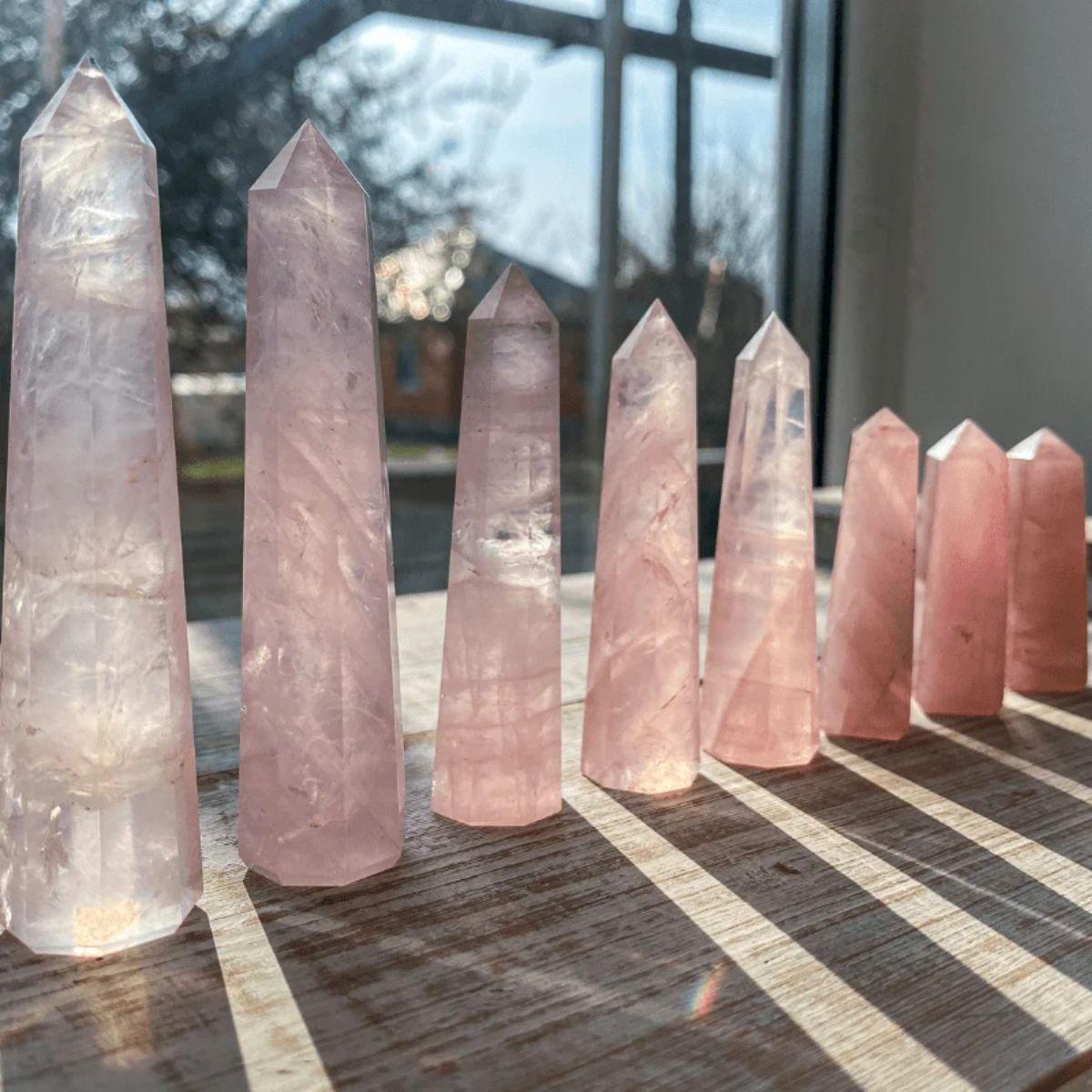
I get asked one question more than almost any other: “Can my crystal necklace go in the shower?”
The short answer is please don’t. The long answer is this guide.
This guide is about energetically cleansing crystals and loose stones — moonlight, smoke, sound, and above all which stones can’t touch water. If your stone is set in metal on a chain, the rules change, and that’s covered in how to cleanse your jewelry. If you’re after the physical side — tarnish, polish, metal-by-metal — that’s how to clean jewelry. And for where it all lives when you’re not wearing it, there’s how to store jewelry.
If you’ve been wearing crystals for years, you already know the practice isn’t about a stone fixing your week. It’s a reminder you can hold — a way of putting your attention somewhere on purpose. Cleansing is part of that. Not because a stone “fills up” with bad energy like a sponge, but because the ritual of resetting it resets you. You set it down heavy and pick it back up clear.

Shop the stones in this guide: Gemstone Jewelry · Chakra Collection · Crystal Necklaces
What most cleansing guides skip is which methods will quietly ruin the stone you love. So I’m starting with the part nobody warns you about. (If you want the wider map — what each stone means, which chakra it answers to, what it’s good for — that lives in crystal meanings A–Z.)
Start here: which crystals can’t get wet
This is the section that saves your collection. Water is the most common cleansing method and the one most likely to do damage. Some crystals are soft, some are porous, and a few release something you don’t want on your skin.
Here’s the whole thing in one table. Screenshot it, bookmark it, tape it inside a cupboard door — whatever keeps it handy at the sink.
| Stone | Water | What happens |
|---|---|---|
| Clear Quartz | Rinse OK | The workhorse. Cool water, dry properly, done. |
| Rose Quartz | Rinse OK | Durable. Quick rinse, never a long soak. |
| Amethyst | Rinse OK | Water is fine. Sun is what fades it. More in the amethyst guide. |
| Black Tourmaline | Rinse OK | The one you reach for on hard days. Holds up fine. |
| Citrine | Rinse OK | Brief contact only, and keep it out of long sun. |
| Tiger Eye | Rinse OK | Hard and non-porous. A rinse won’t bother it. |
| Aventurine | Rinse OK | Fine with brief water contact. |
| Carnelian | Rinse OK | Fine with brief water contact. |
| Moonstone | Damp wipe | Layered structure. It can chip along the layers — wipe, don’t soak. |
| Opal | Damp wipe | Holds water in its structure. Soaking and drying can craze it. |
| Pearl | Damp wipe | Nacre is delicate. Wipe after wearing, never submerge. |
| Turquoise | Damp wipe | Porous. It drinks in water, oil and soap, and the colour shifts. |
| Lapis Lazuli | Damp wipe | Porous and often waxed. Water dulls the surface. |
| Selenite | Keep dry | Dissolves. Clouds, pits, breaks down. Dry methods only. |
| Malachite | Keep dry | Can release copper compounds when wet. Dry, full stop. |
| Angelite | Keep dry | Absorbs water, swells, turns brittle. |
| Calcite | Keep dry | Soft and porous. Water dulls the surface fast. |
| Lepidolite | Keep dry | Soft and layered. It flakes. |
| Kyanite | Keep dry | Splits along its blades. Skip the water. |
| Pyrite | Keep dry | Iron content. Water rusts it from the inside out. |
| Labradorite | Keep dry | Layered. Water works into the layers and dulls the flash. |
| Aura Quartz | Keep dry | The shimmer is bonded metal vapour, not stone. Water strips it and it does not come back. How aura coatings are made → |
The rule of thumb: if a stone’s name ends in “-ite,” verify before you wet it. And if you’re not sure, don’t risk it — dry cleansing works on everything.
I learned the aura quartz one the expensive way, in the rain, in a parking lot. You don’t have to.
Set in metal? The rules change
Worth saying plainly, because it catches people out: the moment a stone is set in a chain or a band, you’re caring for two materials at once.
- Water and metal don’t mix long-term. Even a water-safe stone shouldn’t sit in water — moisture creeps into the setting, tarnishes sterling, and thins gold plating.
- Salt is a setting-killer. It works on raw stones, but it corrodes metal and eats the finish off a chain. Never bury a finished piece in salt.
The full version — how to cleanse a ring, a necklace, gold specifically, and which soft stones need sound instead of smoke — is in how to cleanse your jewelry.
Not sure which stone you’re caring for?
My 60-second Gemstone Quiz tells you which stone is for the chapter you’re in — and once you know, you’ll know exactly how to care for it.

Four ways to cleanse crystals without water
1. Moonlight (safe for everything)
The most forgiving method. Moonlight doesn’t fade stones the way sun can, and there’s no water or salt to worry about.
- Set your stones on a natural surface — wood, stone, or a cloth — on a windowsill or outside.
- Put them out around moonrise. A Full Moon is the traditional choice, but any clear night works.
- Bring them in before direct morning sun hits, especially amethyst, rose quartz, citrine, and fluorite, which can fade.
Want to time it to a specific moon? Each full moon has its own character, and the ritual changes with it:
- Buck Moon — July. Growth, antlers, taking up space.
- Strawberry Moon — June. Harvest and gratitude.
- Snow Moon — February. The quietest reset of the year.
- New Moon rituals for beginners — if you’d rather set intentions than release them.
2. Sacred smoke (safe for everything)
Sage, palo santo, cedar, or sweetgrass. Smoke cleansing is dry, fast, and works on every stone.
- Light your herb, let it catch, then blow out the flame so it smolders.
- Pass each stone slowly through the smoke, turning it so the smoke reaches all sides.
- Set a plain-English intention as you go — something like “I’m setting this down clear.” No script required.
A note worth keeping: white sage and sweetgrass are sacred to Indigenous traditions. If that’s not your lineage, palo santo or cedar are respectful alternatives, and sourcing them ethically matters.
3. Sound (safe for everything)
Good for stones you meditate with, and the kindest method for soft stones like moonstone and opal. A singing bowl, a bell, a tuning fork — even a playlist of resonant tones works in a pinch.
- Hold the stone near the sound source, or set it on the table beside the bowl.
- Let the tone ring out fully two or three times.
- That’s it. Sound moves through stone without touching it.
4. Salt (raw stones only — never jewelry)
Effective for hard, unset stones like quartz points and amethyst clusters. Bury them in dry sea salt overnight, then brush off completely.
- Only for hard, non-porous stones. No soft or porous stones.
- Never for finished jewelry — salt corrodes metal and degrades chains.
Two rituals for when you want more than maintenance
Cleansing can be a thirty-second wipe, or it can be a moment you mark. On the weeks you need the second kind, here are two that have stayed with me.
The Full Moon reset
- Set your stones out under the moon on a natural surface, just after dark.
- Light a candle. Name one thing you’re ready to set down — out loud or on paper.
- Leave the stones overnight. Collect them before the morning sun.
- In the morning, choose the one stone you want to carry for the week ahead.
The weekly smoke clear
- Light sage or palo santo whenever a stretch has felt heavy.
- Move the smoke over each stone and picture the week’s residue lifting with it.
- Thank the stone — not because it did the work, but because it reminded you to.
- Set a fresh intention for what’s next.
Where they live in between
Most stone damage doesn’t happen during cleansing. It happens in a drawer, in a heap, in February — hard stones scratching soft ones, coated stones rubbing each other bare. Storage by metal, by stone, and through a Calgary winter has its own guide: how to store jewelry so it lasts.
A simple care schedule
You don’t need to overthink this. Consistency beats intensity.
- Daily: Wipe with a soft cloth. Store dry. Set your intention as you pick it up — that’s the practice, not a chore.
- Weekly: A quick moonlight, smoke, or sound cleanse. Pick whichever fits your week.
- Monthly: A deeper reset on or near the Full Moon. A good moment to check whether the stone you’ve been reaching for is still the one your chapter is asking for.
If your intentions have shifted — new season, new chapter, new thing you’re carrying — that’s worth noticing. Many people find their stone changes when their life does. If you’re drawn to a colour before you know the stone’s name, start with what each crystal colour means.
The stone doesn’t do the work. You do.
That’s the whole philosophy here. A clean, cared-for crystal isn’t a battery you’ve recharged — it’s a reminder you’ve kept sharp. The ritual of looking after it is really the ritual of looking after yourself, on purpose, on a Tuesday, when nobody’s watching.
If you don’t yet know which stone is for the chapter you’re in, that’s the place to start. The Gemstone Quiz takes about a minute and points you to the stone — and the piece — that fits where you are right now.
Browse the full gemstone collection, or if you’re working with energy centres, start with the chakra collection and the chakras for beginners guide.
Crystal cleansing FAQ
Which crystals can’t get wet?
Selenite, malachite, angelite, calcite, lepidolite, kyanite, pyrite, labradorite and aura quartz should all stay dry. Selenite dissolves, malachite can release copper compounds, and aura quartz loses its coating permanently. Moonstone, opal, pearl, turquoise and lapis lazuli are damp-wipe only. As a quick check, many “-ite” stones are water-sensitive — verify before rinsing.
Can I wear my crystal necklace in the shower?
No — and this is the most common way pieces get ruined. Shower water is hot, soapy and constant. Soap film dulls stones, moisture works into settings and tarnishes sterling silver, and heat plus steam thins gold plating faster than anything else you do. Take it off before you get in, every time. Same for hot tubs, pools and the ocean.
Can aura quartz get wet?
No. The iridescent finish on aura quartz is a bonded layer of metal vapour, not part of the stone. Water, rain and weather strip it away, and once the shimmer is gone it cannot be restored. Cleanse it with smoke or sound only, and don’t leave it outdoors.
How do I know when a crystal needs cleansing?
There’s no reading on a dial. Most people go by feel: the piece stops catching your eye, or you’ve worn it through a heavy stretch and want to mark the end of it. A weekly rhythm covers you either way — you’ll never be behind, and you don’t have to interpret anything.
Can you leave crystals outside to cleanse in the moonlight?
Overnight is fine; longer is a risk. Leave them out past sunrise and direct sun fades amethyst, rose quartz, citrine and fluorite — permanently. Rain damages porous and coated stones. Put them out after dark, bring them in before the sun clears the horizon.
How often should I cleanse my crystals?
A light cleanse once a week and a deeper reset monthly (often timed to the Full Moon) suits most people. Wipe stones and store them dry in between. If a stretch has felt heavy, cleanse whenever you feel moved to.
Can I cleanse crystals without sunlight or moonlight?
Yes. Sacred smoke (sage, palo santo, cedar) and sound (singing bowls, bells, tuning forks) both work indoors, anytime, on every stone. Neither uses water or risks fading.
Do I need to cleanse a brand-new crystal?
Many people like to, simply as a way of marking it as theirs and setting an intention. A quick smoke or moonlight cleanse is plenty for a new stone.
Keep reading:
- How to cleanse your jewelry — rings, necklaces, and anything set in metal
- How to clean jewelry — tarnish, metal by metal
- How to store jewelry — boxes, pouches, and prairie winters
- Crystal meanings A–Z — what every stone means
- Lab-created, hydro, aura and glass — what you’re buying
- How to build a crystal bracelet stack from scratch


