

Blue, and not subtle about it.
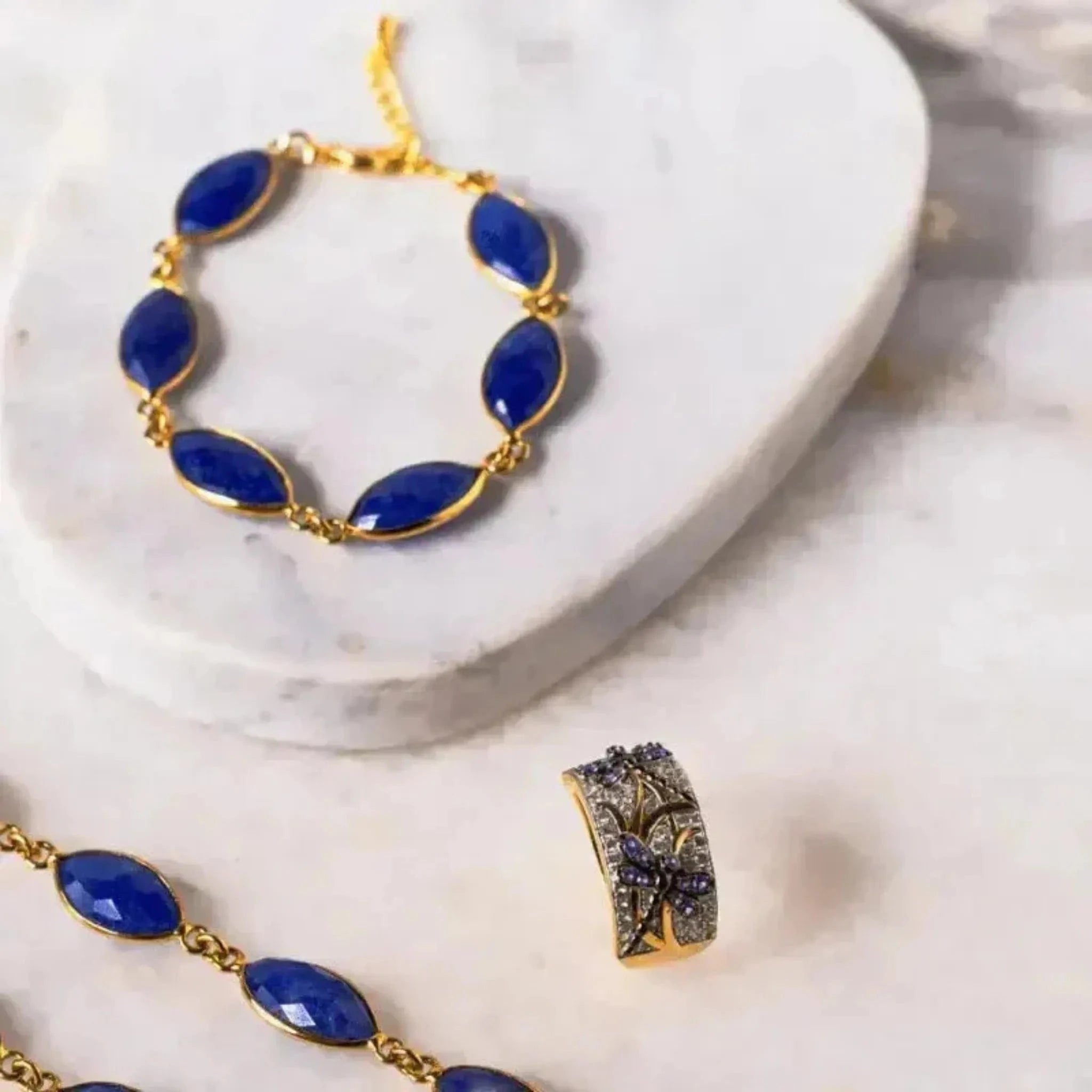

Type: bracelets
Sapphire Bracelet | September Birthstone Jewelry


Type: earrings
Sapphire Statement Earrings | Grace and Wisdom


Type: earrings
Lapis Lazuli Drop Earrings | Truth & Calm Confidence


Type: earrings
Sapphire Statement Earrings | September Birthstone Style | Bold Blue Drop Earrings

Type: necklaces
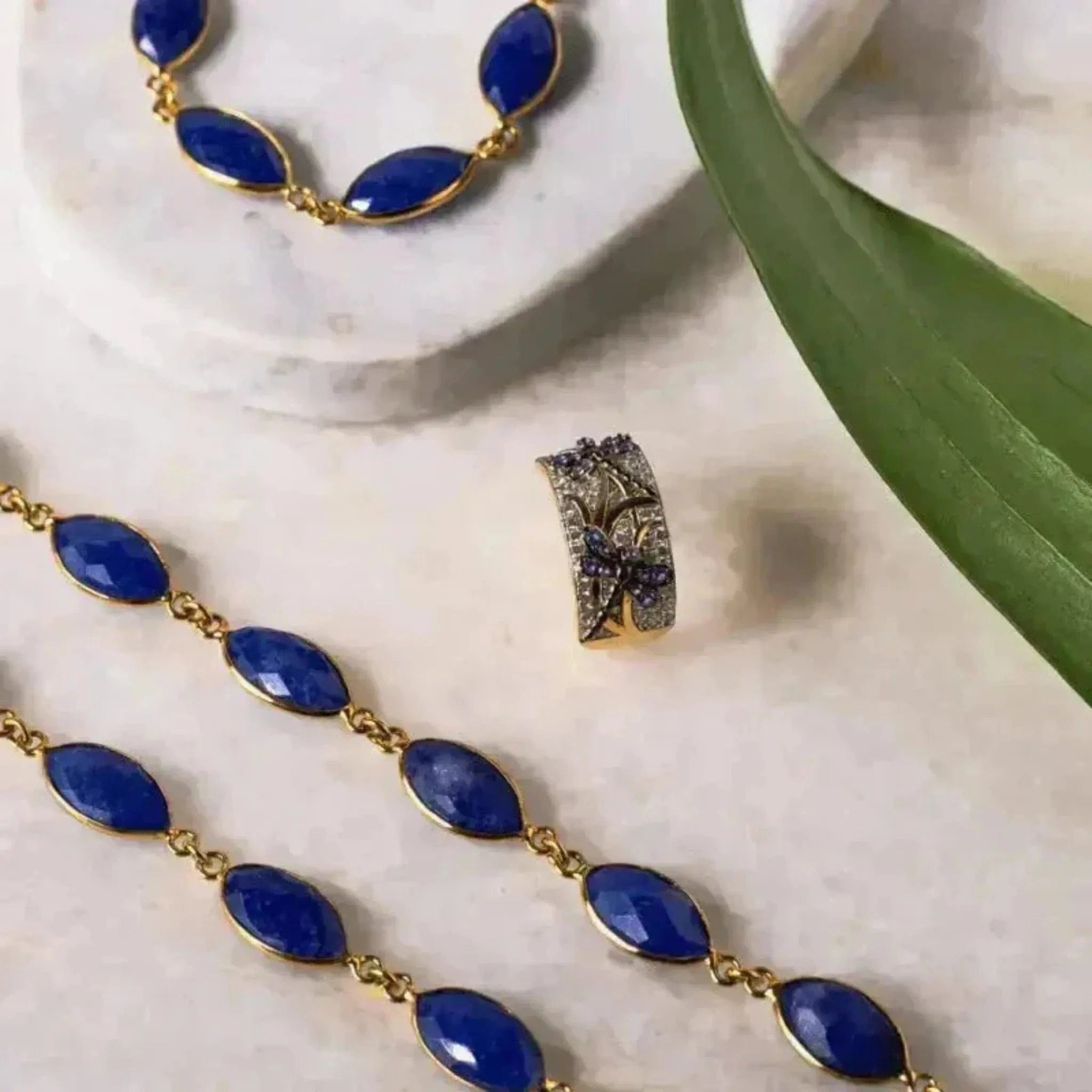
Ethereal Sapphire Gemstone Chain Necklace | Natural Sapphire

Type: rings
Dragonfly Ring | Lab-Grown Sapphire + CZ | Transformation Talisman


Type: necklaces
Lapis Lazuli Teardrop Necklace | Third Eye Intuition & Throat Chakra Expression


Type: bracelets
Lapis Lazuli Bracelet | Adjustable Cord | Third Eye + Throat Chakra | Truth Stone


Type: earrings
Lapis Lazuli Water Drop Stud Earrings | Third Eye Intuition


Type: necklaces
Sapphire Exquisite Teardrop Necklace | September Birthstone Blue


Type: earrings
Sapphire Exquisite Teardrop Earrings | September Birthstone Blue


Type: earrings
Sapphire Elegant Pebble Earrings | Blue Glass | Gold


Type: necklaces
Selene Necklace | Sapphire, Capri, Aqua, Citrine or Opalite Glass | Gold or Silver

Type: earrings
Selene Drop Earrings | Sapphire, Capri, Aqua, Citrine or Opalite Glass | Gold or Silver


Type: bracelets
Faceted Gemstone Bracelet Set | Lapis, Amethyst, Aquamarine, Moonstone


Type: necklaces
Hammered Gold Medallion Necklace | CZ Center Stone
Two blues that have nothing in common
September carries sapphire as the modern birthstone and lapis lazuli as the older traditional one, and they are chemically unrelated in almost every way that matters. Sapphire is corundum — a single crystal, transparent, one of the hardest materials on earth. Lapis is not a mineral at all but a rock, a compacted mix of lazurite, calcite and pyrite, which is why it reads as deep navy flecked with gold rather than as a clear stone.
Sapphire also comes in every colour except red, which is the same mineral and gets called ruby instead. Blue is simply the shade September claimed. Lapis has been mined in the same Afghan valleys for something like six thousand years and spent most of that history ground into ultramarine pigment — the blue in Renaissance paintings, more expensive by weight than gold.
Genuine sapphire does not fade
This is worth stating plainly, because it is the single most common thing people get wrong about the stone. Sapphire is corundum, a 9 on the Mohs scale, and its colour comes from trace iron and titanium locked inside the crystal structure. It is colour-stable. It does not bleach in sunlight, it does not go pale in a window, it does not wash out.
So if a piece sold as sapphire faded, it was not doing what sapphire does. It was almost certainly dyed, diffusion-treated, fracture-filled or a blue look-alike material standing in for the colour — all of which can and do lose colour with light and wear. That is not a scandal in itself; treated and simulated stones are legitimate materials sold openly every day. It only becomes a problem when nobody says so.
Every listing here names its material outright: genuine sapphire, lab-grown sapphire, or blue glass. Lab-grown sapphire is real corundum with the same hardness and the same colour stability, grown rather than dug. Blue glass is called blue glass. Nothing here is described as sapphire that isn't corundum.
What September's stones are for
Both sit at the throat. Sapphire's traditional job was truth and clear judgement — medieval kings and clergy wore it partly as a protection against being deceived, which says more about medieval courts than about the stone. Lapis is the intuition side of the same territory, sitting between throat and third eye: knowing the thing first, then finding the words for it.
Between them they cover the whole awkward business of saying what you mean. The September sapphire guide goes further into the meaning and how to wear it.
Care — two very different routines
Sapphire is close to indestructible in daily wear. At 9 on Mohs only diamond scratches it, and it takes knocks well. Warm water, mild soap, soft brush.
Lapis is the opposite and needs real care. It is soft, around 5 to 5.5, and porous. Water gets into it, and the pyrite in it can react. Never soak lapis, never use an ultrasonic cleaner, and keep it away from perfume, hairspray and household cleaners — those will dull the surface permanently. Wipe with a barely damp cloth and dry it. Put jewellery on last, take it off first. Full routine in the crystal care guide.
Wearing it
Deep blue is one of the few colours that genuinely suits both metals. Silver keeps sapphire cool and modern; gold warms it and reads more traditional. Lapis is the reverse of a subtle stone — the gold pyrite flecks already put warm metal into the piece, so gold settings look intentional and silver looks deliberately cool against it.
For a September birthday, a pendant or studs are the safe choice: nothing to size, and blue this saturated does not need to be large to be noticed.
Common questions
Does sapphire fade in sunlight?
No. Genuine sapphire is corundum — 9 on Mohs and colour-stable. A blue stone that faded was dyed, diffusion-treated, fracture-filled or a look-alike material, not sapphire behaving badly.
Is this genuine sapphire, lab-grown or glass?
Each listing says which. Lab-grown sapphire is real corundum with the same hardness and colour stability. Glass is called glass.
What is September's traditional birthstone?
Lapis lazuli. Sapphire is the modern one. Both are worn for September, and both sit at the throat.
Can lapis lazuli get wet?
Avoid it. Lapis is soft and porous — no soaking, no ultrasonic cleaner, and keep it away from perfume and hairspray. A barely damp cloth, then dry it.
Is sapphire durable enough for everyday wear?
Very. Only diamond is harder. Sapphire is one of the few coloured stones you can wear in a ring without thinking about it.
Why is lapis flecked with gold?
That's pyrite, a natural part of the rock. Lapis is a rock rather than a single mineral, so the calcite veining and pyrite flecks are the stone being itself.