

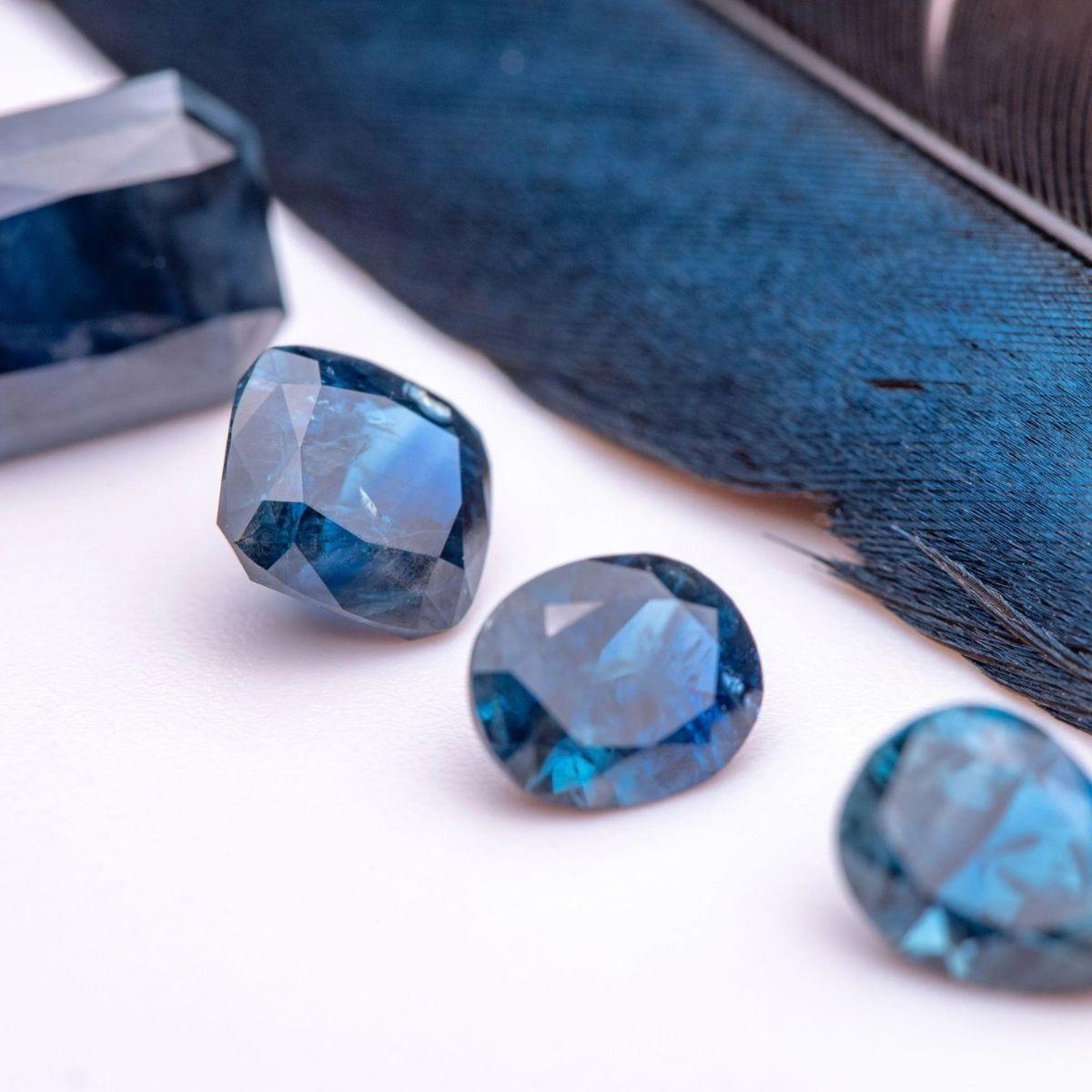
September's birthstone is sapphire. That's the short answer, and I'll give you the long one, but I want to start somewhere else, because September is a strange month and the stone suits it exactly.
September here is one long negotiation. You put the sandals away. You take them back out. You leave a sweater in the car and don't touch it for eleven days, and then one morning you need it before you've finished the coffee. Everything is half-turned. Nothing has committed.
Sapphire is the stone for the part of that you're not saying out loud yet. Not the "find your voice" version: you have a voice, you've had one for decades. I mean the specific, slightly uncomfortable thing you already know and have been rehearsing in the car. That one.
Ready to wear it? My September birthstone necklaces and earrings all sit on one shelf: genuine and treated stones first, labelled look-alikes after, so you always know what you're getting.
Quick Shop: Shop September | All Twelve Birthstones | Shop Every Month

Jump To: September's Stone | Colour | Cost | Meaning | Lapis | The Pieces | Gifts | How to Wear It | The Aster | September's Sky | FAQ
What Is the Birthstone for September?
Sapphire, and unlike August, which got handed three, September keeps it simple. Sapphire is both the traditional and the modern birthstone, and it has been for as long as the modern lists have existed.
So why does everyone bring up lapis lazuli? Because lapis is the deep-blue stone people associate with September by instinct. It's an ancient September companion in a lot of older traditions, and it sits beautifully next to sapphire. It's a partner, not a rival. I carry both and I'll tell you exactly when I reach for each one further down.

Some months do have more than one: June and December are the messy ones. The full twelve-month lineup explains why the lists don't always agree.
What Colour Is the September Birthstone?
Classically, deep velvety blue: the shade most people picture when they hear the word. But blue is a choice sapphire makes, not a rule it follows.
Sapphire is corundum, and corundum comes in nearly every colour there is: pink, yellow, green, violet, peachy padparadscha, colourless. There's exactly one shade it doesn't get to keep. Red corundum is called ruby. Same mineral, different name, entirely different price bracket. Gemology has its politics.
Which is useful if you're shopping for a woman who already owns blue. Pink sapphire is still sapphire, and it reads as a considered choice rather than a default one.
Why One Sapphire Costs More Than Another
It's also a 9 on the Mohs hardness scale, which puts it second only to diamond. That matters more than the romance does. A sapphire piece is not a drawer piece. It takes daily wear, sleeves, seatbelts, dishwater and a purse without flinching.
Now the money question, because I don't do mystery pricing.
Grade drives the price, not authenticity. Gem-grade sapphire is transparent and faceting-grade; that's what you're paying for when the number climbs. Opaque-grade sapphire is genuine natural sapphire from the same mineral family, just not see-through, and it costs a fraction. It isn't fake. It isn't lesser. It's real stone, honest grade, honest price, and I'd rather tell you that than let you assume a low number means something's wrong.
Most blue sapphire on the market has been heat-treated. This has been standard practice for centuries and it's disclosed industry-wide as normal. Heat deepens and evens the colour. Untreated stones exist and cost considerably more, and I won't claim a piece is untreated unless I know it is.
Lab-grown sapphire is chemically the same stone. Same crystal structure, same hardness, grown rather than dug. It's a good option if you want the durability and the colour without the mining question. I wrote about how lab-created stones are made if you want the whole picture.
And if you ever see a sapphire with a six-rayed star floating across the dome as you tilt it, that's a star sapphire, and the effect comes from tiny needle-like inclusions inside the stone. Inclusions, which in any other gem would be the flaw, are the entire point. I think about that a lot.

What Does Sapphire Mean?
Every birthstone gets assigned a job. Sapphire's is one of the better ones.
It's been called the Stone of Truth for centuries: worn by clergy and royalty, associated with wisdom, loyalty and clear judgement. Traditionally it sits with the throat chakra, the one that governs saying the thing rather than swallowing it.
Which sounds lovely and abstract until you're fifty-eight and you've spent thirty years being the reasonable one. Then it gets specific. Sapphire isn't for discovering what you think. It's for the gap between knowing and saying: the conversation you've drafted six times, the boundary you keep almost setting, the "I'd rather not, thank you" that comes out as "sure, no problem."
I'll say the companion-not-cure part because I mean it: a stone doesn't hand you the sentence. It's not therapy and it's not medical advice. But there's something to wearing a decision at your throat where you can feel it. Women tell me the same thing over and over: the piece doesn't do the work, it reminds them they already decided to.
If the chakra side is new to you, the beginner's guide to the seven chakras is the plain-English version, no incense required. And if you're building a stone practice rather than buying one piece, start at the complete crystal guide.
Lapis Lazuli: The One for Before You're Ready to Say It
If sapphire is speaking, lapis is seeing.
Lapis lazuli is an opaque stone: deep midnight blue, shot through with gold flecks of pyrite that look like a night sky someone put in your hand. Because it's opaque rather than transparent, the same grading logic applies: it's a real natural stone at an honest grade, which is why a lapis piece costs what it costs and a sapphire one costs what it costs. Different stones, different rules, no sleight of hand.

The Egyptians ground it into pigment and set it into the death masks of pharaohs. It's in the Eye of Horus. Very few stones on my bench have that CV.
Traditionally lapis is tied to the third eye and intuition: the honest look at what's shifting before you've found words for it. That's why I pair it with sapphire rather than choosing between them. Lapis for the noticing. Sapphire for the sentence. September, as a threshold month, tends to need both.
The longer read is in the Third Eye Chakra guide.

September Pieces, Sorted by What They Are
Genuine sapphire (natural, opaque grade):
- Sapphire Bracelet — $125.
- Sapphire Statement Earrings — $150.
- Ethereal Sapphire Gemstone Chain Necklace — $250.
Lab-grown sapphire (same mineral, grown):
- Dragonfly Ring — $125. Lab-grown sapphire with CZ, size 7.
Genuine lapis lazuli:
- Lapis Lazuli Drop Earrings — $28.
- Lapis Lazuli Bracelet — $35. Adjustable, no sizing.
- Lapis Lazuli Water Drop Studs — $35.
- Lapis Lazuli Teardrop Necklace — $39.
- Faceted Gemstone Bracelet Set — $65. Lapis with amethyst, aquamarine and moonstone.
Sapphire colour, not sapphire. These are glass:
- Sapphire Elegant Pebble Earrings — $35.
- Sapphire Exquisite Teardrop Necklace — $45.
- Selene Necklace — $45. Choose sapphire; the matching Selene Drop Earrings are $45.
Shop September → · Take the Quiz →
September Birthday Gifts: The Cheat Sheet
If you're shopping for a September woman, here's how to stop overthinking it. Everything below lives in the September collection.

The one who is finally saying things out loud → sapphire at the throat. The Ethereal Sapphire Gemstone Chain Necklace ($250). She'll clock the meaning without you having to explain it, which is the entire trick of a good birthstone gift.
The one who is still working it out → lapis. The Lapis Lazuli Drop Earrings ($28) are the piece I've sent to more people than anything else in this collection. Deep blue, gold-plated, unfussy, and easy to add to something else rather than agonizing over one big swing.
The one who wants the deep cut → the Dragonfly Ring ($125). Lab-grown sapphire, all the hardness and colour, plus a dragonfly for the chapter that's changing shape.
The one who wears everything at once → the Faceted Gemstone Bracelet Set ($65). Lapis with amethyst, aquamarine and moonstone: four stones, one decision, and it covers three other birthdays if you're buying ahead.
One honest note: most of my natural sapphire pieces are single stones set one at a time, so there's only one of several of them. If something on the collection page catches you, it isn't a marketing tactic. It's just the one.
How to Wear Sapphire
Sapphire blue is cool-toned and saturated, which makes it easier to wear than people expect. It sits well against grey, cream, navy, black and every version of denim, and it does something quietly good next to gold.

Then / Now, since I've lived both:
Then: the good blue piece, saved for an occasion sufficiently important to justify it. The occasion never quite arrived. The box stayed shut.
Now: sapphire on a Tuesday. Grocery store, dentist, nothing happening. The second half is the occasion. That was the whole memo.
For layering, the rule that keeps blue from going costume is one hero and one echo. Let the sapphire lead and let the second piece only murmur. Lapis is the ideal echo, because it's the same family of blue in a completely different texture. The full method is in the guide to layering with intention.
Care is refreshingly easy on the sapphire side and less so on the lapis side. Sapphire at 9 shrugs off almost everything. Lapis is soft, around 5 to 6, and dislikes perfume, hairspray and being stored against harder stones. Store them apart. The full care guide covers metals and stones separately, the crystal care guide handles the moonlight-and-smoke side, and how to cleanse your jewelry is the short practical version if you only want one method.
The Aster, While We're Here
September's birth flower is the aster, named from the Greek word for star, with small star-shaped petals in purple, pink and white. Folklore had people burning it to keep misfortune off the property.
What I like is the timing. The aster blooms as everything else is packing up, and holds its colour into the cold without appearing to consider that a hardship. Next to sapphire and lapis it makes a beautiful September palette: two blues and a star-petal purple.
September's Sky, Briefly
The month gives you three natural checkpoints, and none of them require a ceremony.
The Virgo new moon lands early in the month: the quiet one, better for naming what you want than for announcing it. If you want the ritual itself rather than the idea of one, it's in the New Moon in Virgo guide, and the Virgo season stones sit alongside it.
The autumn equinox arrives around the 22nd, day and night in equal measure: the most honest checkpoint in the year for asking what you're carrying into the dark half. The equinox guide has the full version.
Then the Harvest Moon closes the month: the release one, the full moon that lands nearest the equinox. Every moon ritual I've written lives in the moon magic hub if you'd rather browse than be told.
A whole September ritual, if you want the fast one: light a candle, put a sapphire or lapis piece where you can see it, write down one thing you're grateful for from the summer and one sentence you've been avoiding saying. Then say it, out loud, to nobody. Practising counts.
September Birthstone FAQ
What is the birthstone for September?
Sapphire is September's birthstone, both traditional and modern. Lapis lazuli is widely treated as September's companion stone because of its deep blue and its long history, but sapphire is the official one. September's birth flower is the aster.
What colour is the September birthstone?
Deep blue is the classic September birthstone colour, but sapphire occurs in pink, yellow, green, violet, orange-pink padparadscha and colourless. Only red corundum is excluded; that gets called ruby. Pink sapphire is still sapphire and a good pick for someone who already owns blue.
What does sapphire symbolize?
Wisdom, truth, loyalty and clear judgement. It's been called the Stone of Truth for centuries. Traditionally it's linked to the throat chakra and to honest speech, which makes it a fitting piece for anyone in a season of saying the thing rather than swallowing it.
Why is one sapphire piece so much more expensive than another?
Grade, not authenticity. Transparent gem-grade sapphire is what drives the price up. Opaque-grade sapphire is real natural sapphire from the same mineral, just not see-through, and costs a fraction. Most blue sapphire on the market is also heat-treated to deepen colour; that's standard, centuries-old practice and disclosed as normal across the industry.
Is sapphire good for everyday wear?
Yes. It's a 9 on the Mohs scale, second only to diamond, so it handles daily wear better than almost any other coloured stone. Lapis is the opposite: soft at around 5 to 6, and unhappy with perfume, hairspray and being stored against harder pieces. Keep them in separate pouches.
What's the difference between sapphire and lapis lazuli?
Both are blue and that's roughly where it ends. Sapphire is a hard, brilliant gem tied to truth and speaking. Lapis is a soft, opaque stone flecked with gold pyrite, tied to intuition and inner seeing. They layer beautifully precisely because the textures are so different.
Find Her Stone in About a Minute
If you're not sure whether she's a sapphire woman or a lapis woman, or you're buying across three birthdays and would like to stop guessing, take the 60-second gemstone quiz. It matches the woman to the stone her chapter is asking for, which is the only reason I do any of this. Then browse the September pieces and pick the one that already looks like her.
Say the thing. Wear the blue.
Andrea 🌙
Join The Circle.
15% off your first order (good for 7 days), plus the Birthday Club, so your month gets remembered too.
Join The Circle →
More Birthstones: ← August (Peridot) | All Twelve Birthstones | October (Opal & Tourmaline) →
Mystic Soul Jewelry — Canadian small business, Calgary, Alberta, since 2008. Honestly labelled, always.


