

The loyalty that shows up on a Tuesday.


Type: necklaces
Emerald Flower Pendant Necklace | Opaque Emerald | May Birthstone


Type: bracelets
Emerald Bracelet | Gold Plated | Heart Chakra | Love & Abundance


Type: necklaces
Emerald Temple Column Necklace | Emerald Hydro Quartz | Gold Finish


Type: necklaces
Emerald Leaf Pendant Necklace | Heart Chakra Jewelry


Type: necklaces
Emerald Green Hydro Quartz Necklace | Element Collection

Type: necklaces
Emerald Gemstone Chain Necklace | Element + Birthstone Collection


Type: jewelry sets
Emerald & Pearl Jewellery Set | Necklace & Bracelet


Type: jewelry sets
Emerald & Moonstone Jewellery Set | Sacred Geometry


Type: earrings
Emerald Earrings | Opaque Teardrop Emerald | Statement Cascading Gold Disc

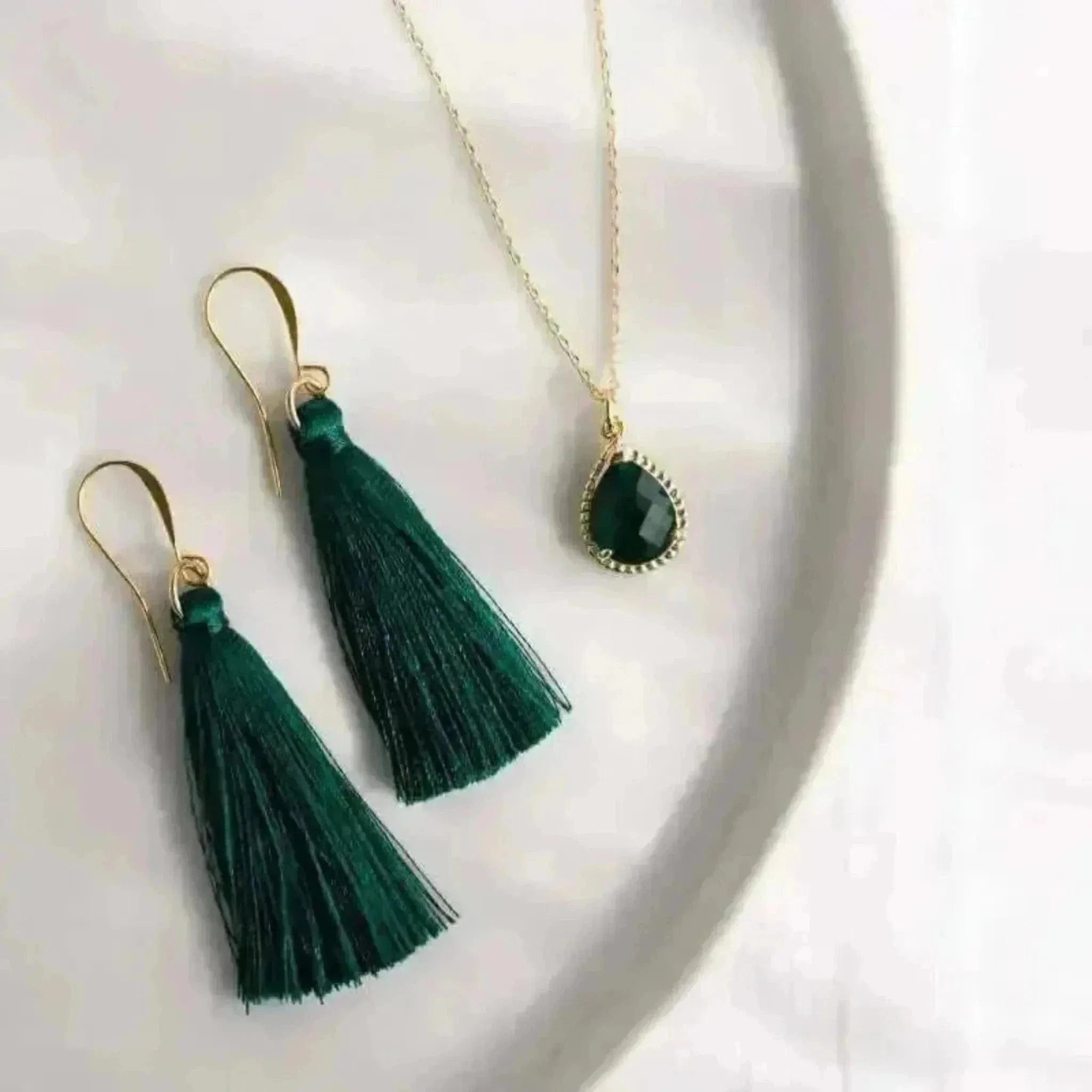
Type: earrings
Silk Tassel Earrings | Gold Plated | Emerald Green


Type: necklaces
Emerald Green Heart Charm Necklace | Layered Planet Pendant


Type: earrings
Emerald Green Bleeding Heart Stud Earrings | Gold-Plated Sterling Silver


Type: earrings
Emerald Athena Earrings | Green Glass Drops | Gold or Silver


Type: earrings
Emerald Exquisite Teardrop Earrings | May Birthstone Green

Type: necklaces
Emerald Exquisite Necklace | May Birthstone Green

Type: necklaces
Emerald Athena Necklace | Green Glass Pendant | Gold or Silver


Type: earrings
Emerald Elegant Pebble Earrings | Green Glass | Gold or Silver


Type: earrings
Glass Huggie Earrings | Capri Blue, Clear, Emerald


Type: necklaces
Triangle Drop Birthstone Necklace | Ruby or Emerald Opaque Gemstone | Gold Plated


Type: necklaces
Crystal Pendulum Necklace | Amethyst or Emerald Green Hydro Quartz


Type: earrings
Amethyst or Emerald Cleo Drop Earrings | Gold or Silver


Type: necklaces
Hammered Gold Medallion Necklace | CZ Center Stone
What emerald actually is
Emerald is beryl — the same mineral as aquamarine, coloured green by chromium or vanadium instead of iron. It sits at 7.5–8 on the Mohs scale, which sounds durable, and in one sense is. Hardness and toughness are different things, though, and emerald is the standing example of why that distinction matters.
Nearly all emerald contains internal fractures and inclusions. The trade calls them jardin — garden — because they look like foliage suspended in the stone, and they are considered characteristic rather than a flaw. A completely clean emerald is so rare it invites suspicion. But those fractures mean emerald chips and cracks more readily than its hardness number suggests.
Almost all emerald is also oiled or resin-filled to reduce the visibility of those fractures. This is standard, disclosed industry practice going back centuries. It is also the reason emerald must never go near an ultrasonic cleaner — it strips the filling and the stone looks worse afterwards.
Why May gets it
Emerald's traditional associations are love, patience and truthfulness, and it has been the anniversary stone for so long that it now carries as much weight for couples as for May birthdays. Older sources credit it with revealing lies and with soothing the eyes — the second of which is at least plausible, given the colour.
It sits at the heart, the tender register rather than the open one. Where peridot's heart energy is lightness, emerald's is commitment: staying, repairing, choosing the same thing again. The kind of loyalty that shows up on an ordinary Tuesday rather than a dramatic one.
May is also the month everything finally turns green here, so the timing is not subtle.
Genuine, lab-created and look-alikes
Fine natural emerald is among the most expensive gems in the world, so this is a month where the material question genuinely matters.
Lab-created emerald is real beryl — same chemistry, same colour mechanism, grown rather than mined, and typically cleaner than natural stone because it has not spent millions of years being compressed. Green glass, dyed quartz and green cubic zirconia also appear widely in "emerald" jewellery elsewhere.
Every listing here states which it is: genuine, lab-created, or a look-alike standing in for the colour. A look-alike is never described as emerald.
Wearing and caring for it
Green is a strong, saturated colour and reads richest against gold. Silver cools it and makes it sharper and more contemporary. It is a colour that carries an outfit rather than accessorising it.
Care: warm water, mild soap, soft cloth, dried straight away. No ultrasonic, no steam, no harsh detergent — all three attack the oil or resin. Take rings off for anything physical. Full routine in the crystal care guide, and the longer read is in the May emerald guide.
Common questions
Why does my emerald have visible marks inside it?
Those are natural inclusions — the trade calls them the stone's garden. They're characteristic of emerald, not a defect, and a flawless one would be extraordinarily rare.
Can emerald go in an ultrasonic cleaner?
No. Nearly all emerald is oiled or resin-filled, and ultrasonic cleaning or steam strips that treatment. Warm water and mild soap only.
Is lab-created emerald a real emerald?
Yes — it's beryl with the same colouring elements, grown rather than mined, and often cleaner than natural stone.
Is the stone genuine?
Each listing says. Green glass, dyed quartz and green cubic zirconia are all common in this colour, so the material is always named outright.
Is emerald tough enough for a ring?
It's hard but not tough — internal fractures mean it chips more easily than its hardness suggests. Pendants and earrings are lower risk; take rings off for anything physical.
Does emerald work as an anniversary gift?
It's one of the classic ones. Its association with patience and staying power makes it read differently from a birthday stone.