

Shop the rose quartz edit
Rose quartz has a reputation problem. Somewhere along the way it got handed to twenty-two-year-olds as the “love stone” — the one you put on your nightstand to summon a soulmate, the pink thing in the manifesting starter kit. Which is fine. But it has almost nothing to do with why a woman picks it up at fifty-five.
By the second half of life, you are not reaching for rose quartz to call something in. You already have the people. You have the history, the grandchildren, the friendships that survived the divorces and the diagnoses. What you reach for it for is quieter, and harder to put on a starter-kit label: permission to stop bracing.
Rose quartz meaning after 50, in one line: it's the heart-chakra stone, worn not to attract love but to soften where you've been holding on for years — a daily reminder that you're allowed to receive, not just give.
This is one stone in a much wider map. If you’re assembling the bigger picture, The Complete Crystal Guide: Where to Start is the pillar this sits inside.
The stone got typecast
Here is the thing about being the woman everyone leans on. You get very good at being solid. You hold the family logistics, the aging parents, the adult kids who still call when the car makes a noise. You become the one who absorbs the weather so the room stays calm. And after enough decades of that, “steady” stops being something you do and becomes something you are clenched into.
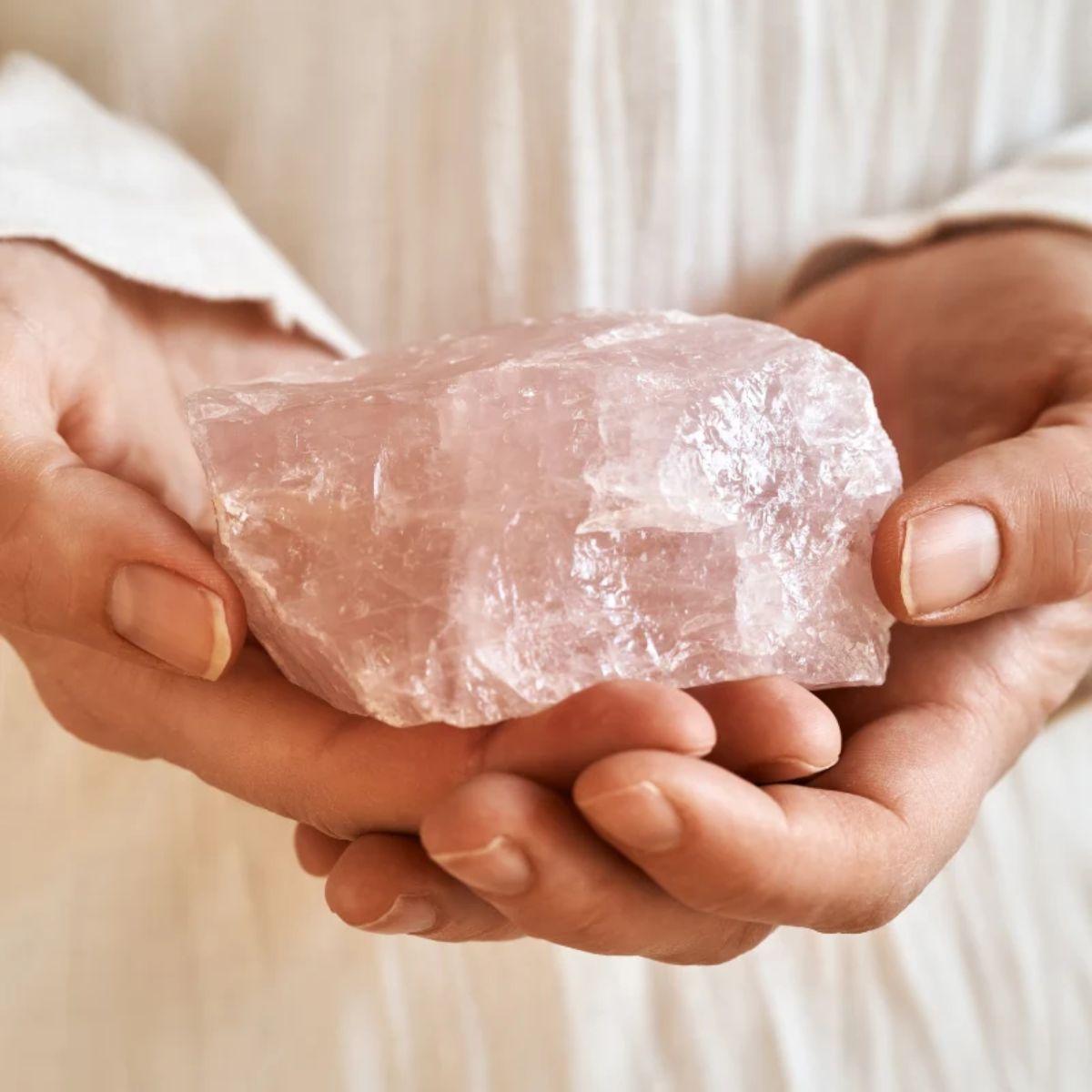
Rose quartz, traditionally, is associated with the heart — not the romantic heart of greeting cards, but the older idea of the heart as the place that softens or hardens depending on what life has asked of it. It has been worn for that association for a very long time, across cultures that had no interest in nightstand manifesting. The pink color comes from trace titanium and iron, and the milky cloudiness is the stone’s signature; a too-clear, too-bright pink is usually a sign it’s been dyed. (More on telling real from fake in a minute.)
None of that means the stone does anything to you. This is the part the starter kits get wrong, and the part worth saying plainly: a crystal is not a fix. It doesn’t heal, cure, or repair. What it does is sit on your sternum and remind you of an intention you set when you put it on. The work is still yours. The stone just refuses to let you forget you decided to do it.

What rose quartz means after 50: softening, not romance
When younger women talk about softening, they usually mean opening up to love. When a woman in her sixties says it, she usually means something closer to unclenching. There’s a difference between being soft and being soft-hearted, and most of us spent the first half of life confusing the two.
Softening at fifty-five looks like: letting your daughter make the wrong call and not rescuing her from it. Saying “I don’t have the capacity for that this week” without a paragraph of apology attached. Sitting in the car for two minutes before you walk into the house, just because the radio song isn’t over. It is not weakness. It is the specific kind of strength that takes thirty years to learn, which is the strength to stop performing strength.
A lot of women in this chapter wear rose quartz precisely because it argues with the part of them that thinks rest has to be earned. You glance down, you see the pink, and you remember: you’re allowed to soften, even on a hard Tuesday. Especially on a hard Tuesday.
The heart chakra, without the jargon
Rose quartz is the stone most associated with the heart chakra, called Anahata in the older texts. You don’t need to believe anything mystical for the framework to be useful. The heart chakra is simply the traditional name for the energy center associated with compassion, connection, and the balance between giving and receiving — and if you’ve spent your life on the giving end of that equation, you already know exactly which side of it runs low.
In practice, women use a heart-chakra stone as a daily cue rather than a treatment. You wear it on the days you know you’ll over-give — the family dinner, the hospital visit, the call with the sibling who never asks how you are. It’s a touchstone for receiving, not just pouring out. If the whole chakra idea is new to you, our beginner’s guide to the chakras walks through all seven without the gatekeeping.
Not sure rose quartz is the stone for the chapter you’re in? The Gemstone Quiz takes about sixty seconds and points you to the stone your season is asking for — not the one a starter kit assigned you.
How to wear rose quartz in the second half
The twenty-somethings stack it with twelve other crystals and call it a vibe. You’re past that. At this age the wearing is simpler and more deliberate, and three patterns come up again and again.
The everyday pendant. A single rose quartz drop on an 18-inch chain, worn under whatever you already wear. Nobody sees it. That’s the point — it sits against your sternum where only you know it’s there, a private reminder on a day that’s asking a lot of you. Browse the crystal necklaces if a quiet daily piece is what you’re after.
The intention bracelet. One strand of rose quartz beads, often worn on the receiving hand — for most women, the left wrist. The logic is old and the comfort is real: you feel the weight of it when you reach for your coffee, and it does the small job of interrupting the bracing for half a second. If you’re building it into a set, the Crystal Bracelet Stacks collection starts with moonstone, rose quartz and amethyst — buy two, the third is free.

Rose Quartz Heart Chakra Bracelet — $28
The mother-love piece. Rose quartz isn’t only about softening toward yourself. A great many of these pieces are bought as gifts — for a daughter starting over, a sister mid-treatment, a friend who’s carrying too much. If that’s the chapter you’re shopping for, the same softness applies; you’re just sending it outward.
Real rose quartz vs. the dyed stuff
Because rose quartz is so popular, the market is full of dyed quartz and glass posing as the real thing. A few honest tells: genuine rose quartz is usually a soft, milky, slightly cloudy pink — not a vivid Pepto pink. It often has subtle internal fractures or a faint cloudiness rather than glassy clarity. And it stays cool to the touch longer than glass does. Trust is the whole product here, so every rose quartz piece we list is verified as genuine natural stone before it goes up. If it’s dyed or treated, that is stated in the description. For the same buyer questions about amethyst, see amethyst for stress and anxiety; the logic carries straight over. And if you're wondering whether a sparkly pink piece is glass or crystal, here's the difference, explained.
Caring for it (lower-maintenance than you’d think)
Rose quartz is durable enough for daily wear — it’s a quartz, so it’s hard — but the color can fade with long, direct sun exposure, so it prefers moonlight to a sunny windowsill for charging. A wipe with a soft cloth and the occasional cleanse is all most pieces need. The full method, including which stones hate water, is in our crystal wisdom & care guide.
The reframe, in one line
Rose quartz at twenty-five is about who you want to love. Rose quartz at fifty-five is about finally including yourself on the list. You spent decades being the strong one. The stone isn’t here to make you weak — it’s here so you remember that softening, at this point, is the strength.
Rose quartz questions, answered
What does rose quartz mean?
Traditionally, rose quartz is associated with the heart — compassion, self-kindness, and the balance between giving and receiving. After 50 it's usually worn as a daily reminder to soften and to let yourself receive, not as a treatment for anything. It doesn’t heal or fix; it accompanies the work you’re already doing.
Which chakra is rose quartz?
The heart chakra (Anahata), the energy center associated with compassion and connection. That’s why it’s a common choice for women who tend to over-give. Our beginner’s chakra guide explains the full system.
How can I tell if my rose quartz is real?
Genuine rose quartz is a soft, milky, slightly cloudy pink rather than a bright, even, glassy pink, which usually signals dye. Real stone also stays cool to the touch longer than glass. When in doubt, buy from a seller who verifies their stones.
Can I wear rose quartz every day?
Yes — it’s a hard, durable quartz suited to daily wear. Just keep it out of prolonged direct sun, which can fade the pink over time, and cleanse it occasionally. See the care guide for the method.
Is rose quartz a good gift?
It’s one of the most-given pieces we make, especially for a daughter, sister, or friend going through a hard season. The softening it points to works just as well sent outward as worn yourself.
If rose quartz is the chapter you’re in, wear it where only you can see it and let it do its quiet work. And if you’re not sure it’s your stone — if your season is asking for grounding, or clarity, or something with more fire — let the Gemstone Quiz match you to the one your chapter is begging for. It takes about a minute, and there’s no pressure if the answer surprises you.
Keep Reading:


