

Four places most people start:
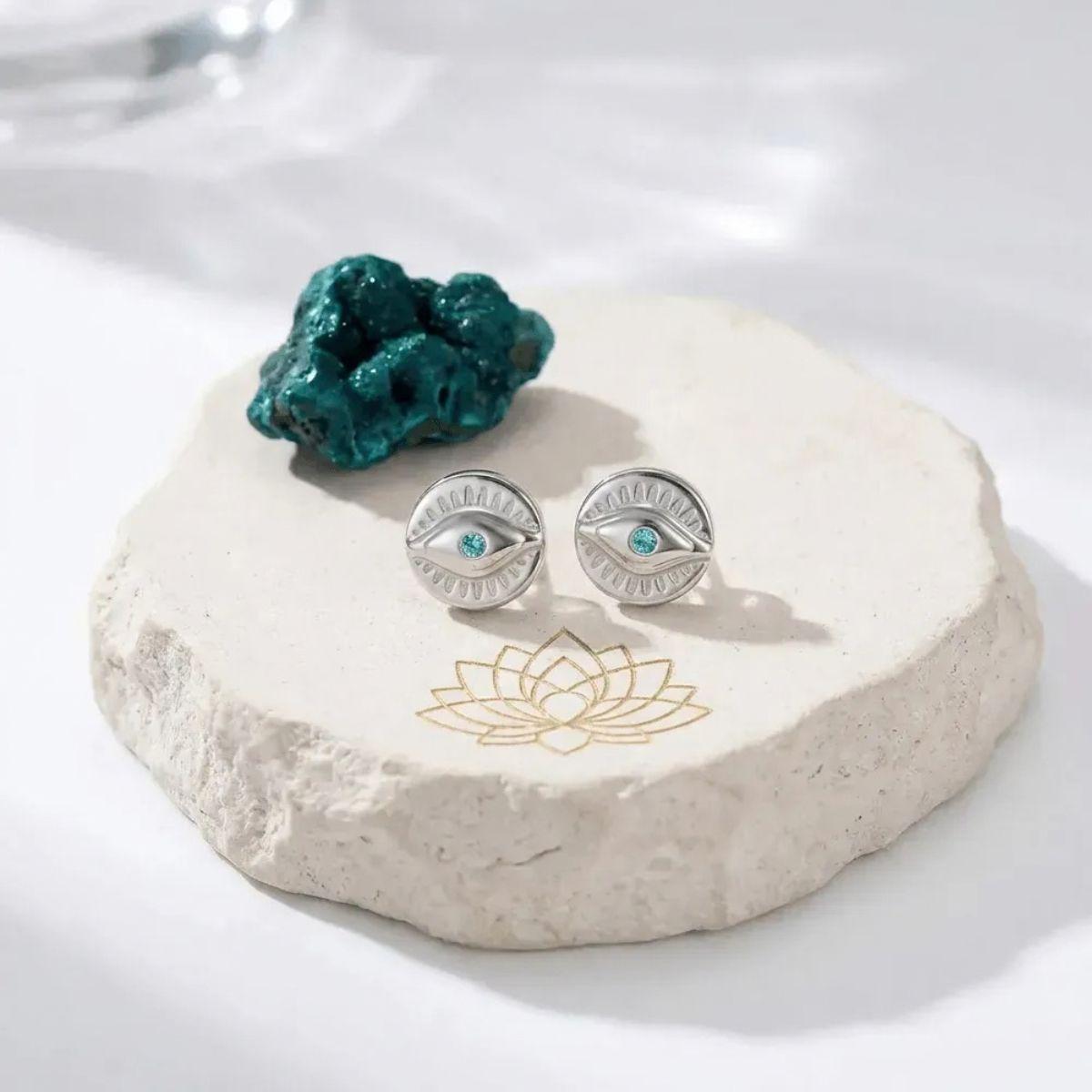
 Evil Eye Stud Earrings$25
 Hamsa Hand Ring$25
 Angel Wing Necklace$45
 Sterling Silver Feather Ring$120
Shop protection jewelry Shop the gift guide
The short answer: the five most-worn protection symbols are the evil eye, the hamsa, the tree of life, the angel wing and the feather. The first two deflect what's coming at you. The last three anchor you so less can knock you over. Which camp you're in decides your piece in about ten seconds.
The first piece of protection jewelry I ever sold, the woman didn't ask what stone it was. She asked, "Will it help me feel less like I'm bracing for something?" That's the real job of these pieces. Not a force field. Something steady to touch when the day gets loud.
People have worn protection symbols for thousands of years, across nearly every culture, not out of fear but out of the very human wish to carry something solid. A protection piece isn't a fix. It's a reminder that you've got yourself.
Here are the five I reach for most, what kind of protection each one offers, and how to wear it. For the wider picture, each of these sits in the sacred symbols guide alongside the rest.
Or skip ahead. Every protection piece I carry lives in one place: Protection Jewelry, sorted by what women reach for most, so the proven ones sit at the top.

The Two Kinds of Protection
Before the list, the thing that decides it for you. Protection pieces split into two camps, and knowing which one you want makes the choice about ten seconds long.
Deflecting: something coming at you that you want turned away. The draining coworker, the room that leaves you flat, the conversation you're dreading. Evil eye and hamsa live here.
Anchoring: nothing to deflect, you just want to be harder to knock over. Tree of life, angel wing and feather live here.
Most women I talk to know instantly which one they need. If you don't, you're probably in the second camp. Deflecting is usually obvious when it's what you want.
1. The Evil Eye: The Classic for a Reason
The most recognized protection symbol there is. The evil eye (or nazar) is worn to deflect unwanted energy: the sideways glance, the draining room, the comment that lingered. It looks back so you don't have to.
How to wear it: close to the pulse, a wrist or a short necklace, where you'll catch it in a mirror and remember. The Evil Eye Stud Earrings are the easiest first one. The full story is in the evil eye meaning guide, and the pieces are in evil eye jewelry.
2. The Hamsa: The Open Hand
An open palm, often with an eye at its centre. Across traditions it means the same thing: blessings in, harm held back. It's protection with warmth. Not a wall, but a welcome that also knows its boundaries.
How to wear it: hand up is the classic protective position; hand down invites abundance in. Both are right. The Hamsa Hand Ring is adjustable and waterproof, so it never has to come off. More in the hamsa hand guide, or browse hamsa jewelry.
3. Tree of Life: Protection That Comes From Being Rooted
Not every kind of protection is about deflecting. Some of it is about being so grounded that less can knock you over. The tree of life, roots down and branches up, is for the woman protecting her peace by staying rooted in who she is.
How to wear it: as a longer pendant, resting over the heart. See the tree of life meaning, or shop tree of life jewelry.
4. Angel Wings: The One Watching Over
A wing carries the oldest protection wish there is: someone has your back. It's the piece people reach for after a loss, a scare, or a hard season, a way to keep a presence close.
A wing is quieter than the rest. It doesn't deflect anything or draw a boundary. It just says: you're not doing this on your own.
How to wear it or gift it: a delicate wing pendant, often given to someone as "I'm watching out for you." The Angel Wing Charm Necklace pairs a wing with a star and a glass drop, in gold or silver. Short enough to layer, simple enough to wear every day.
5. The Feather: Protection That Travels Light
A feather is guidance and protection at once: a sign you're being watched over, and a nudge to trust the path. It's the least heavy of the five, for the woman who wants her protection to feel like freedom, not armour.
How to wear it: layered long, or as a ring you'll notice all day. The Rutilated Quartz Feather Necklace pairs the feather with a stone threaded through with gold. The Sterling Silver Feather Ring is the everyday version. Browse them all in feather jewelry.


How to Wear Protection When You'd Rather Nobody Asked
The part most guides skip. Sometimes the reason you want a protection piece is the exact reason you don't want to explain it: the divorce nobody knows about yet, the diagnosis, the boss, the family thing. You want the reminder without the conversation.
Three ways to do that:
Wear it turned in. A hamsa or evil eye pendant on a shorter chain sits under a collar. You feel the weight of it all day. Nobody sees a thing.
Go abstract. Tree of life and feather read as ordinary jewelry to anyone who isn't looking for meaning. A tree pendant is just a pretty pendant until you know. That deniability is the whole point for some women, and it's a completely legitimate reason to choose one over an evil eye.
Put it on your hand. A ring is the most private protection piece there is, because you're the only one looking at it forty times a day. Nobody clocks a ring as symbolic. You will, every time you reach for something.
You don't owe anyone the story behind what you're wearing. Half the reason I carry these is so you don't have to tell it.
How to Choose Your Protection Piece
Skip the rules. Pick by the kind of protection you want: evil eye or hamsa to deflect what's coming at you, tree of life to stay rooted through it, angel wing or feather to feel watched over and light. If two keep pulling your eye, wear both. Protection layers beautifully.
And if this is your first one, start small. Nothing about a protection piece requires it to be an investment. A pair of evil eye studs or a hamsa ring does the same job as anything else on this page, and I'm bringing in more easy-entry pieces so the first one never has to be a decision you sleep on. Browse the whole range in Protection Jewelry and sort by price if that's the honest starting point. It usually is.
Reminder, not a fix. The piece doesn't do the work. It just reminds you that you already are.
Stones That Pair With Protection Symbols
- Black tourmaline: the classic protection stone, and the natural partner for an evil eye or hamsa.
- Labradorite: for the woman who soaks up the mood of every room.
- Rutilated quartz: the stone in the feather necklace, carried for clarity when the path is foggy.
Protection Jewelry as a Gift
This is the gift for a friend in a season she didn't choose. The sister the week the separation goes public. The friend between scans. Your daughter heading into her first job where nobody knows her yet. An angel wing or a feather says "I'm watching out for you" without a speech. An evil eye or hamsa says "go do the brave thing, I've got your back." More ideas by meaning are in the gift guide.
Not sure which stone is for the chapter you're in?
The Gemstone Quiz takes 60 seconds.
Take the Gemstone Quiz →
Protection Jewelry FAQ
What jewelry is worn for protection?
The evil eye, hamsa, tree of life, angel wing and feather are the five most-worn protection pieces. Each carries the same core idea, something steady to keep close, in a slightly different flavour. The first two deflect; the last three anchor. You can see them all together in the Protection Jewelry collection.
Does the evil eye really protect you?
Traditionally it's worn to deflect unwanted energy, and many people wear it for exactly that. I think of it as a reminder to protect your own peace. Not a guarantee, but a grounding habit you can touch.
What's a good protective jewelry gift for someone going through a hard time?
An angel wing or feather pendant is the easiest. It says "I'm watching out for you" without needing words. Evil eye and hamsa are close seconds for a friend who could use a boundary.
What does an angel wing necklace mean?
A wing is worn as a reminder that someone has your back, a presence kept close. It's a common piece to give after a loss or during a hard season, and a common one to wear in memory of someone. Unlike the evil eye or hamsa, it isn't about deflecting anything. It's about company.
Which side should I wear protection jewelry on?
There's no wrong answer, but many wear protection on the left, the receiving side, to guard what comes in. Mostly: wear it where you'll see it and remember. More on that in left wrist or right.
Can I wear more than one protection symbol?
Yes. Layering an evil eye with a tree of life or a feather is common and beautiful: different kinds of protection, one stack. If you're building a stack, the bracelet stack guide walks through it.
Can I wear protection jewelry without it being obvious?
Easily. A tree of life or feather reads as ordinary jewelry to anyone who isn't looking for meaning. A pendant on a shorter chain sits under a collar. And a ring is the most private option there is. You're the only one who sees it all day.
How much should a first protection piece cost?
Less than you'd think. What a piece costs has nothing to do with how much it steadies you. A pair of studs does the same job as a stone-set pendant. Start with something you'll wear daily rather than something you'll save for occasions, and add from there if it earns its place.
Keep Reading
Mystic Soul Jewelry — Canadian small business, Calgary, Alberta, since 2008.
Want the next symbol guide in your inbox when it goes up? The prayer wheel is next. Join The Circle. It's my list, it's free, and 15% off your first order and the Birthday Club come with it.
— Andrea


