> Skip to content
Jewelry cleaning guide — how to clean sterling silver, gold, plated, stainless steel, and gemstone jewelry safely

The Complete Jewelry Care Guide | How to Clean Every Metal and Stone You Own

The first thing I'll tell you about jewelry care: most pieces aren't fragile. They're just specific. The ring you've been wearing for ten years didn't fade because you wore it — it faded because nobody told you that hand sanitizer is harder on plated gold than the ocean is. The pearl your grandmother left you didn't go dull because of time — it dulled because someone soaked it. 

This is the complete guide to keeping every piece you own bright, intact, and wearable for the long version of your life. Every metal. Every stone. The cleaning methods that work, the mistakes that ruin pieces in one wash, and the small daily habits that mean you almost never have to deep-clean anything.

Bookmark this one. You'll come back to it.

Quick shop

Shop All  |  Best Sellers  |  Crystal Necklaces  |  Bracelets  |  Chakra Jewelry

Jump to

Cheat sheet · Why jewelry dulls · What you actually need · Sterling silver · Solid gold · Gold & silver plated · Stainless steel · Gemstones — stone by stone · The danger list · How often to clean · When to call a pro · Storage that works · Travel care · Troubleshooting · FAQ


The cheat sheet

If you only read one section, read this one. The rest is the why.

Material Soak? Brush? Best finish Avoid
Sterling silver Yes — 5-10 minutes in mild soap Soft baby toothbrush Silver polishing cloth Toothpaste (too abrasive), chlorine, sulfur
Solid gold (10K, 14K, 18K) Yes — 10-15 minutes Soft toothbrush, light pressure Microfiber or gold cloth Chlorine pools, harsh chemicals
Gold-plated No No Soft dry cloth Soaking, dips, ultrasonic, abrasive cloths
Silver-plated No No Soft dry cloth Same as gold-plated
Stainless steel Yes Yes — soft brush Microfiber Bleach, ammonia
Hard gemstones (quartz, sapphire, ruby, diamond) Yes — brief Soft brush, light pressure Microfiber Ultrasonic if glued setting, harsh chemicals
Soft / porous stones (pearl, opal, turquoise, lapis, malachite, amazonite, moonstone) No No Barely damp cloth only Water soaking, ultrasonic, dips, lotion
Very soft / water-sensitive (selenite, calcite, fluorite) Never water No Dry soft cloth only All water exposure

If you're not sure what you have: use a barely-damp cloth with a tiny drop of mild dish soap. Wipe gently. Dry immediately. That method won't restore a badly tarnished piece, but it won't ruin anything either.


Why jewelry loses its shine

Three things are doing the dulling work:

1. Body chemistry plus moisture. Sweat, humidity, perfume, lotion, hair product, sunscreen, hand sanitizer — every one of them leaves a film. Stack them across days and weeks and you get a layer that scatters light instead of reflecting it. Most "dull" jewelry isn't damaged — it's just dirty.

2. Tarnish on silver. Sterling silver oxidizes when it meets air, sulfur compounds, and humidity. The brown-to-black film you see isn't dirt — it's a chemical reaction. Tarnish is normal, expected, and reversible.

3. Plating wear. Gold-plated and silver-plated pieces have a thin layer of precious metal over a base. Chlorine, abrasives, and chemical dips strip that layer faster than wear ever would. The "fading" people complain about with plated jewelry is almost always preventable.

And one more thing nobody mentions: hand sanitizer is harder on plated jewelry than the ocean is. Alcohol-based sanitizer eats the bond between the plating and the base metal. If you wear a plated ring through three years of pandemic-era hand sanitizer use, that's why it looks the way it looks.


What you actually need (it's almost nothing)

You don't need an arsenal. The full kit fits in a small drawer:

  • Mild dish soap (Dawn original works perfectly — nothing scented or "for sensitive skin")
  • Warm water (not hot — hot water can shock some stones)
  • A soft baby toothbrush or makeup brush
  • Microfiber cloth (two — one for washing, one for drying)
  • A small bowl with a soft towel laid in the bottom (so pieces don't bang against the bowl)
  • Optional but useful: a silver polishing cloth or gold polishing cloth, both available cheap on Amazon

Three principles to apply to everything:

  1. Gentle is powerful. Over-scrubbing strips plating, scratches stones, and loosens settings. If you're working hard, you're working wrong.
  2. Know your material before you start. The same method that brightens sterling silver will destroy a pearl. Identify what you have first.
  3. Dry thoroughly. Water trapped in settings is how rings get internal corrosion. After cleaning, lay pieces on a clean cloth and let them air-dry completely before storing.

Sterling silver — the most-asked-about metal

Sterling silver tarnishes. That's not a flaw — it's the metal's natural reaction to sulfur in the air. Higher humidity, more pollution, more sulfur foods (eggs, onions, wool, rubber) all speed it up. The good news is tarnish is almost always reversible.

Method 1: Soap and water (your default)

  1. Fill a bowl with warm water and a few drops of mild dish soap.
  2. Soak the piece for 5–10 minutes.
  3. Gently brush with a baby toothbrush, paying attention to detail work and chain links.
  4. Rinse under running water.
  5. Dry with a soft cloth, then leave to air-dry fully.
  6. Finish with a silver polishing cloth for the final shine.

Method 2: Baking soda paste (for heavier tarnish)

Mix baking soda with a few drops of water until it forms a thick paste. Apply to silver with a soft cloth, rub very gently, rinse thoroughly, dry. Do not use this method on plated silver, on pieces with soft stones, or on pieces with antiqued/oxidized detail you want to keep.

Method 3: The foil-and-salt method (deep tarnish only)

Line a bowl with aluminum foil, shiny side up. Add hot water, one tablespoon baking soda, and one tablespoon salt. Drop sterling silver in and watch the tarnish transfer to the foil. Works through a chemical reaction (it's actual chemistry, not magic). Soak 2–5 minutes, rinse, dry.

Use foil-and-salt only on solid sterling silver. Never on plated pieces, never on pieces with porous stones, never on pieces with glued settings.

What kills sterling silver

  • Toothpaste (the abrasives in it scratch the surface — silver looks shiny short-term but micro-scratched long-term)
  • Chlorine pools and bleach
  • Hot tubs (chlorine plus heat is the worst combination for any jewelry)
  • Rubber bands or rubber storage (sulfur in rubber accelerates tarnish hard)

For a low-effort everyday option, Connoisseurs Silver Polishing Cloths are the workhorse of the cleaning shelf — fast, no mess, and they last for years.


Solid gold (10K, 14K, 18K)

Solid gold is the easiest metal to clean. It doesn't tarnish in the traditional sense — pure gold is too unreactive — but it picks up film from daily life like everything else does. Higher karat means softer metal (24K pure gold is too soft for daily wear, which is why fine jewelry is alloyed).

The method

  1. Soak in warm water with mild dish soap for 10–15 minutes.
  2. Brush gently with a soft toothbrush, focusing on under the stones and inside settings where build-up hides.
  3. Rinse thoroughly under running water — over a strainer if you're paranoid about dropping something down the drain.
  4. Dry with a soft cloth.
  5. Finish with a microfiber or dedicated gold polishing cloth for the final shine.

What kills solid gold

  • Chlorine — pools and hot tubs especially. Chlorine attacks the alloy metals (copper, nickel, zinc) mixed with gold, causing pitting and weakening over time.
  • Mercury (rare but worth noting — never wear gold near broken thermometers or amalgam dental work being drilled out)
  • Harsh abrasives

Solid gold can go in an ultrasonic cleaner if the setting is solid (no glued stones, no soft gemstones). If you have any doubt, hand-clean.


Gold-plated and silver-plated jewelry — handle gently

This is where most of your handmade and affordable crystal jewelry sits. Plated pieces have a thin layer of gold or silver bonded over a base metal (often brass or copper). The plating is what you see and love. Once it wears off, the base shows through. Plating wear is mostly preventable.

The method (and only the method)

  1. Slightly dampen a soft cloth with water.
  2. Add one tiny drop of mild dish soap to the cloth.
  3. Gently wipe the piece — no scrubbing, no pressing hard.
  4. Wipe again with a separate barely-damp clean cloth to remove any soap residue.
  5. Dry immediately and completely with a soft dry cloth.
  6. Store separately in a soft pouch.

What kills plated jewelry (in approximate order of damage)

  1. Soaking in any liquid. Water creeps under the plating and accelerates flaking.
  2. Hand sanitizer. The alcohol dissolves the bond between plating and base.
  3. Chemical dip cleaners. Marketed as "instant brilliance" — they're stripping the plating, not cleaning it.
  4. Ultrasonic cleaners. The vibration loosens plating bonds.
  5. Abrasive cloths or baking soda paste. Both grind the plating off in micro-layers.
  6. Perfume and hairspray sprayed directly on the piece. Alcohol again.

The Mystic Soul Jewelry rule for plated pieces: last on, first off. Put your jewelry on after perfume, lotion, sunscreen, and hairspray. Take it off before showering, swimming, sleeping, and the gym. Wipe with a soft cloth at the end of the day. I love using makeup wipes as they are mild. With those habits, gold-plated pieces last for years rather than months.


Stainless steel

Stainless steel is the most low-maintenance metal in jewelry. It doesn't tarnish, doesn't react to most chemicals, and survives the kind of daily wear that would destroy plated pieces.

The method

  1. Soak in warm soapy water.
  2. Brush with a soft toothbrush.
  3. For extra shine, make a light baking soda paste, rub gently with a soft cloth, rinse, dry.
  4. Polish with a microfiber cloth.

What kills stainless steel

  • Bleach (oxidizes the steel)
  • Ammonia-based cleaners
  • Chlorine in very high concentrations over time

If your Memorial Heart Urn Necklace or other stainless piece feels dull, this method will bring it back.


Gemstones — the stone-by-stone guide

This is the section most jewelry care guides do badly. Gemstones aren't one category — they're dozens, with wildly different properties, hardnesses, and tolerances. Below is the honest version, grouped by how to clean them.

Mohs hardness scale ranking minerals from 1 (talc, softest) to 10 (diamond, hardest) for jewelry care

Hardness matters: a quick Mohs scale

The Mohs scale ranks mineral hardness from 1 (talc) to 10 (diamond). For everyday wear, aim for stones at 6 or above. Below 6 needs careful handling.

  • 10 — Diamond
  • 9 — Ruby, sapphire
  • 8 — Topaz, aquamarine, emerald (but emerald is brittle, so still careful)
  • 7 — Quartz family (clear quartz, amethyst, citrine, smoky quartz, rose quartz, rutilated quartz, prasiolite), garnet, tourmaline, peridot
  • 6.5 — Jade, jadeite, tanzanite
  • 6 — Moonstone, labradorite, opal, sunstone, hematite
  • 5–6 — Lapis lazuli, turquoise, sodalite, amazonite, rhodonite
  • 4–5 — Malachite, larimar, fluorite
  • 3–4 — Pearl, coral, calcite, mother-of-pearl
  • 2 — Selenite, gypsum (dissolves in water)

Group 1: Hard stones — safe with mild soap and water

Stones: Clear quartz, amethyst, citrine, smoky quartz, rose quartz, rutilated quartz, ruby, sapphire, garnet, tourmaline, peridot, topaz, aquamarine, diamond

Method: Brief soak in warm soapy water (5 minutes max), soft brush, rinse, dry. Same as cleaning the metal.

Cautions:

  • Amethyst, citrine, and rose quartz can fade in prolonged direct sunlight. Don't store on a sunny windowsill.
  • Emerald is technically hard (Mohs 8) but very brittle and almost always treated with oil that water removes. Damp cloth only for emerald.

Group 2: Hero stones — gentle care

Labradorite — Mohs 6. Gentle damp cloth with a drop of mild soap. Quick rinse if needed. Dry immediately. Avoid ultrasonic cleaners (the flash layer can be sensitive to vibration). Store away from harder stones that could scratch the surface.

Green Aventurine — Mohs 7. Safe with brief soap and water soak. Brush gently if needed. Rinse, dry. One of the more forgiving stones.

Group 3: Porous and soft stones — damp cloth only, no soaking

Stones: Moonstone, opal, pearl, mother-of-pearl, turquoise, lapis lazuli, malachite, amazonite, sodalite, rhodonite, larimar, coral

Method: Wipe with a barely damp soft cloth. A single drop of mild soap on the cloth is okay. Wipe again with a clean damp cloth. Dry immediately and completely.

Why no soaking: These stones are porous. They absorb water, soap, and oils, which can cloud them from the inside (opal, moonstone) or stain them (turquoise, lapis). Pearls are even more delicate — they're essentially layers of nacre that water and acids slowly dissolve.

Special notes by stone:

  • Pearls — wipe after every wear with a soft cloth before storing. They lose lustre faster than any other gemstone if neglected. Pearls are alive in a sense: their oils need contact with skin to stay glowing, so wearing them is part of caring for them.
  • Opal — contains water inside its structure. Store in a slightly humid environment if you live somewhere very dry, or the stone can crack over time. Never expose to extreme temperature changes.
  • Turquoise — absorbs oils from skin and any product you use. Wipe after every wear.
  • Malachite — beautiful but contains copper. Never use harsh cleaners; the dust from grinding malachite is mildly toxic, though normal wear is completely safe.
  • Lapis lazuli — often has flecks of pyrite and white calcite. The calcite is softer than the lapis itself and can wash away with too much water. Damp cloth only.

Group 4: Very soft and water-sensitive — never water

Stones: Selenite, calcite, fluorite, gypsum, alabaster

Method: Dry soft cloth only. Never water in any form.

Why: Selenite is a form of gypsum — it literally dissolves in water. Calcite and fluorite are soft enough that water plus any agitation can cause pitting. If you accidentally got a selenite piece wet, dry it immediately and watch for cloudiness.

Group 5: Special cases

Hydro-quartz and lab-grown stones — same care as natural quartz (Group 1). Brief soak okay, soft brush okay.

Glass beads and dyed stones — wipe with damp cloth only. Soaking can fade dyes and crack glass over time. If you're not sure whether a stone is glass or natural, treat it like glass.

Doublets and triplets (composite stones, common with opal) — never soak. The layers are glued, and water dissolves the adhesive.

Crystal care guide infographic showing which gemstones are safe to get wet and which to keep dry

The danger list — never do these things

Most ruined jewelry was ruined by a method someone thought was helpful. The big offenders:

  • Toothpaste on anything. The abrasives in toothpaste are too rough for jewelry. It makes silver shiny short-term, then micro-scratched long-term.
  • Chemical dip cleaners on plated jewelry. The "instant brilliance" is the plating coming off.
  • Ultrasonic cleaners on plated pieces, soft stones, glued settings, opals, pearls, emeralds, or anything you don't fully understand. When in doubt, hand-clean.
  • Hot water on opals and any stone that contains water. Temperature shock can crack the stone.
  • Bleach on anything. Strips plating, oxidizes steel, weakens gold alloys.
  • Hand sanitizer with jewelry on. Take rings off before sanitizing if you can.
  • Hot tubs with any jewelry. Heat plus chlorine is the worst combination in jewelry care.
  • Soaking pearls, opals, turquoise, lapis, malachite, moonstone, or amazonite in anything.
  • Sleeping in chains. They get tangled, snagged, and stretched. (Most of the broken-chain repairs jewelers see come from sleep.)
  • Storing jewelry in the bathroom. Humidity accelerates tarnish and can crack water-sensitive stones.

How often to clean — by lifestyle, not by calendar

Generic "once a month" advice ignores that some people put on lotion three times a day and some don't own any. Match your cleaning frequency to your habits:

  • Minimal-product wearer (no daily lotion/perfume, light makeup): Quick wipe with a microfiber cloth weekly. Gentle wash monthly.
  • Average wearer (daily moisturizer, occasional perfume): Microfiber wipe twice a week. Gentle wash every 2–3 weeks.
  • Heavy-product wearer (daily lotion + sunscreen + perfume + makeup): Microfiber wipe daily. Gentle wash weekly.
  • Active lifestyle (gym, hot yoga, swimming): Remove jewelry before activity. Wipe whenever you take pieces off after sweating.
  • Pearl wearers, regardless of category: Wipe pearls after every wear, before storing. They cannot wait two weeks.

The single highest-impact habit: wipe pieces with a microfiber cloth before putting them back in storage at the end of the day. Sixty seconds. Prevents most build-up.


When to take a piece to a professional

Some repairs are not DIY. Call a jeweler when:

  • A stone feels loose when you tap the ring gently next to your ear. A loose stone in a prong setting will fall out within weeks if not re-set.
  • A chain has stretched or kinked — soldering or replacement is cheap and brings the piece back to wearable.
  • A clasp doesn't fully close — replace before the piece falls off and goes missing.
  • Plating has worn through in patches, exposing the base metal. Re-plating is a relatively inexpensive service that restores the piece.
  • You inherited something and don't know what it is. A jeweler can identify metal content and stone identity in ten minutes for free or a small fee.
  • A pearl strand needs restringing. Knotted pearl strands should be restrung every 2–3 years if worn often; the silk wears out.
  • Sterling silver tarnish won't come off with normal methods. Professional polishing can restore badly neglected pieces.

If you're in Calgary and want a recommendation for a trustworthy local jeweler, email me at andrea@mysticsouljewelry.com — I keep a list of the ones I actually trust.


Not sure which stone is yours? If you've fallen down this rabbit hole because you want to start a meaningful jewelry practice and don't know where to begin, take the Gemstone Quiz — sixty seconds, no email gate to start, matches you to the stones that fit the chapter you're in.


Storage that actually works

Most jewelry damage happens in storage, not in wear. The fixes are small.

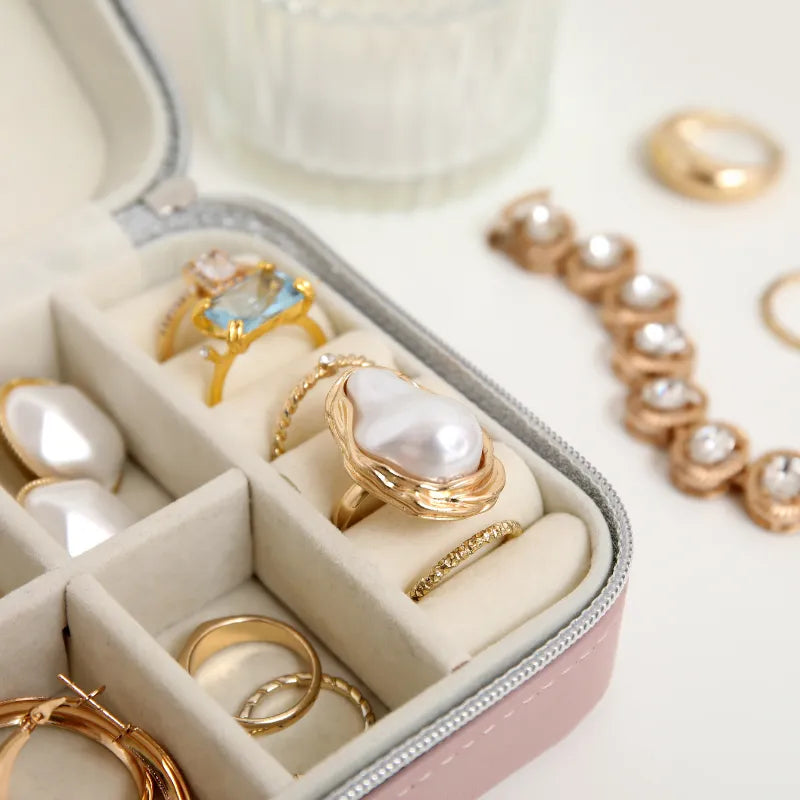
  • Store pieces separately. Chains tangle, harder stones scratch softer ones, and metal-on-metal contact dulls finish. Use a divided tray, a pouch per piece, or a jewelry box with compartments.
  • Keep sterling silver airtight. Anti-tarnish strips or a small sealed bag dramatically slow oxidation. Sterling stored in open air will tarnish; sterling in an airtight bag stays bright for months.
  • Keep pearls and opals away from extreme dry environments. Both contain or rely on moisture. A jewelry box on the bathroom counter (humid) is actually fine for pearls, terrible for almost everything else.
  • Don't store jewelry in plastic for the long term. Some plastics off-gas chemicals that react with silver and gold over years. Soft pouches or fabric-lined boxes are safer.
  • Store rings flat or in individual slots — never piled together. Pile-stored rings get tiny scratches that dull the finish over years.
  • Travel storage: a pill organizer is a brilliant cheap solution for travel — one piece per compartment, prevents tangling, fits in any bag.

Travel care

Travel is rough on jewelry. Hotels, beaches, pools, dry plane air, and sunscreen all stack against you. The basics:

  • Wipe each piece with a microfiber cloth before packing. Pack pieces clean and they stay clean.
  • Use individual pouches or a pill organizer. Tangled chains are the universal traveller's complaint.
  • Take rings off before sunscreen. SPF chemicals build up faster in vacation conditions than anywhere else.
  • Don't shower in plated jewelry, especially in hotels. Some hotel water is hard enough to leave mineral deposits on plating in a single shower.
  • Pool, ocean, lake: take it off. Chlorine and salt are both hard on metals and stones, and lost jewelry in water is mostly unrecoverable.
  • Hotel safes are fine for short stays. For longer trips, consider what each piece would cost to replace — and pack accordingly.

Troubleshooting common problems

My finger turned green under my ring

This is almost always a reaction between copper (in the base metal or in your gold/silver alloy) and acids in your skin, sweat, or hand lotion. The discolouration is harmless — it washes off — but it usually means the plating has worn through or the piece is lower-quality alloy than you'd like for daily wear. Fixes:

  • Remove before washing hands, swimming, exercising
  • Apply a clear coat of nail polish to the inside of the band as a temporary fix (genuinely works for plated rings)
  • Have the ring re-plated, or replace with a sterling silver or 14K gold version for daily wear

My chain is tangled in a tiny knot

Lay the chain flat on a hard surface. Add one drop of baby oil or olive oil to the knot. Use two straight pins (or two sewing needles) to gently work the knot apart from both sides at once. Most chain knots untangle in five minutes with this method. If the chain is sterling silver, clean it after with mild soap to remove the oil.

I dropped my ring down the drain

Don't run the water. The trap under the sink — the U-shaped pipe — usually catches small heavy objects like rings. Place a bucket under the trap, unscrew the trap with a wrench, and check inside. If it's not there, call a plumber before running more water. Many lost rings are recovered this way.

A stone fell out

If you find the stone, save it carefully in a small bag or pill bottle — a jeweler can usually re-set it. If the prongs are damaged, the setting itself may need repair before re-setting. Don't try to glue a fallen stone back in yourself; it almost always shows and weakens future repair options.

My silver is permanently dark even after cleaning

Some sterling silver pieces have an intentional antiqued or oxidized finish where the dark colour in detail work is meant to stay. Polishing those areas removes the design. If you're not sure whether your piece is meant to look this way, look at the photo on the original product page or ask the maker. If it's truly tarnished and won't come clean, a professional jeweler can restore it with a wheel polish.

My piece smells weird after cleaning

Usually means water got trapped in a hollow setting or behind a stone and is going stagnant. Re-clean, dry thoroughly, and air-dry for 24 hours before wearing. If the smell persists, take to a jeweler — there may be a sealed hollow with moisture inside.


Keep this guide in your inbox

If you want my best monthly tips on caring for crystal jewelry — plus the early word on new pieces, moon-cycle rituals, and seasonal styling — join The Circle. It's the free MSJ rewards space, and the welcome email comes with 15% off your first piece.


FAQ — quick answers

How often should I clean my jewelry?

For everyday pieces: a microfiber wipe weekly, a gentle wash every 2–4 weeks. Heavy lotion/sunscreen wearers should wash more often. Pearls need wiping after every single wear.

Can I shower in my jewelry?

For solid gold and stainless steel — yes, occasional showers are fine. For sterling silver — okay but it'll tarnish faster. For gold-plated and silver-plated — no, this is the fastest way to wear plating. For any porous gemstone (pearl, opal, turquoise, lapis, malachite, moonstone) — never.

Can I swim in my jewelry?

Pool: no, chlorine is hard on all metals and stones. Ocean: short exposure is okay for solid gold and stainless steel, but rinse with fresh water immediately after. Lake/river: avoid — silt can scratch and weeds can snag chains. Hot tub: never.

Is jewelry dip cleaner safe?

Sometimes, for solid gold and sterling silver with no soft stones. Never for plated jewelry or any porous gemstone. When in doubt, hand-clean with soap and water.

What's the safest method if I don't know what my jewelry is made of?

Barely damp soft cloth with one drop of mild dish soap. Wipe gently. Dry immediately. This method won't restore badly damaged pieces, but it won't ruin anything.

Why is my finger turning green?

A reaction between copper (in the metal alloy) and your skin chemistry. Usually means plating has worn through. Try clear nail polish on the inside of the band as a temporary fix, or upgrade to sterling silver or 14K gold for daily wear.

Can I use an ultrasonic cleaner at home?

For solid gold with hard stones (diamond, sapphire, ruby, quartz family) — yes. For plated jewelry, pearls, opals, emeralds, soft stones, or glued settings — never. If in doubt, hand-clean.

How do I prevent sterling silver from tarnishing in the first place?

Store in airtight containers with anti-tarnish strips. Wear the pieces often (skin contact actually slows tarnish). Wipe before storing. Keep away from rubber, wool, and sulfur-containing foods during storage.

What's the difference between gold-plated and gold-filled?

Gold-plated has a thin gold layer applied chemically or electrically over a base. Gold-filled has a thicker gold layer mechanically bonded — it's roughly 5% gold by weight and lasts much longer. Both need gentler care than solid gold, but gold-filled is more durable than plated.

Are MSJ pieces really waterproof?

The gold-plated, tarnish-resistant pieces are rated for daily water exposure — showers, weather, hand-washing. They are not designed for prolonged submersion (pools, ocean, hot tubs), and any piece with porous stones still needs the stone-specific care above. Sterling silver pieces handle water but tarnish faster with frequent exposure.

How do I clean my Crystal Paws or pet memorial jewelry?

Treat by metal and stone type using the guidance above. For the Memorial Heart Urn Necklace, the stainless steel is durable and easy to clean — but if it contains ashes or a keepsake, never submerge. Wipe with a damp cloth instead.


The closing thought

Caring for jewelry is part practical and part something else. A piece you've cleaned, dried, and tucked back into its pouch with intention shows up differently the next morning. The maintenance is small. The cumulative effect is that your jewelry lasts decades and keeps meaning what it was meant to mean when you bought it.

Take care of the pieces you love. They're carrying the version of you that bought them.


Explore more from Mystic Soul Jewelry

Related reads